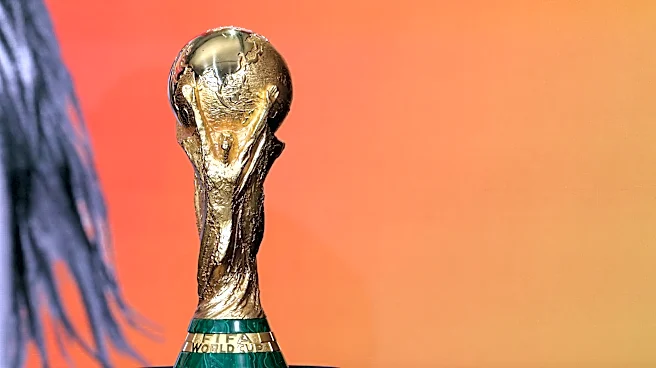

The Big Picture: 48 Teams, 3 Countries, 1 Trophy
First, let's zoom out. The 2026 FIFA World Cup is the first to be hosted by three nations: the United States, Mexico, and Canada. It's also the first to expand to a whopping 48 teams, up from the 32 we’ve
seen for decades. More teams mean more games, more stories, and a longer tournament. But the core concept remains the same. The entire event is designed to do one thing: filter 48 national teams down to a single champion over the course of about five weeks. Think of it as the world’s biggest, most dramatic single-elimination tournament, but with a crucial opening act before the real chaos begins.
Act One: The Group Stage Survival Round
The tournament starts with the Group Stage. The 48 teams are drawn into 12 groups of four. Think of these as 12 mini-leagues. Within each group, every team plays the other three teams once. The scoring is simple: a win gets you 3 points, a draw gets you 1 point, and a loss gets you 0. After all three games are played, the teams in each group are ranked by points. Here's the most important piece of math for new fans: the top two teams from every single group automatically advance to the next round. That accounts for 24 teams moving on. But they’ll be joined by the eight best-performing third-place teams from across all 12 groups. This wrinkle adds late-game drama, as teams can sneak into the next round on goal difference or even fair-play points.
A Brand New Bracket: The Round of 32
This is where the tournament's DNA changes completely, and it’s a new feature for 2026. With 32 teams advancing from the Group Stage (24 group winners/runners-up + 8 best third-place teams), the World Cup will now have a “Round of 32.” If you're an American sports fan, this is the moment to start thinking “playoffs.” From this point on, it’s single elimination. Win and you advance; lose and you go home. There are no more points, no second chances. The bracket is set, and the tension skyrockets. This phase is designed to be a brutal, high-stakes filter, quickly reducing the field by half and setting up blockbuster matchups in the next stage.
The Knockout Gauntlet to the Final
Once we’re past the Round of 32, the format becomes very familiar to anyone who has watched a playoff tournament. The 16 winners advance to the Round of 16, which is followed by the Quarterfinals (8 teams), the Semifinals (4 teams), and finally, the World Cup Final. Each match is a self-contained drama. If a game is tied after 90 minutes of regulation, the teams play 30 minutes of extra time. If it's still tied after that, the winner is decided by a penalty shootout—one of the most nerve-wracking spectacles in all of sports. The path is simple: win five consecutive knockout games after the group stage (or six total for the finalists), and you'll find yourself playing for the trophy at MetLife Stadium in New Jersey on July 19, 2026.
The Geography Game: Regional Pods and Travel
The final piece of the puzzle is geography. With 16 host cities spread across a continent, FIFA has designed the group stage to be geographically clustered. Teams will be based in regional “pods” (East, Central, West) to minimize travel during their first three games. This helps with player recovery and fan logistics. However, as teams advance into the knockout rounds, the continental travel begins. A team could start their journey in Vancouver, play a knockout game in Kansas City, and find themselves in a quarterfinal in Miami. The ability to handle the cross-country travel and changing time zones will become a hidden factor in a team's journey to the final.