







More Than Just Numbers on a Screen
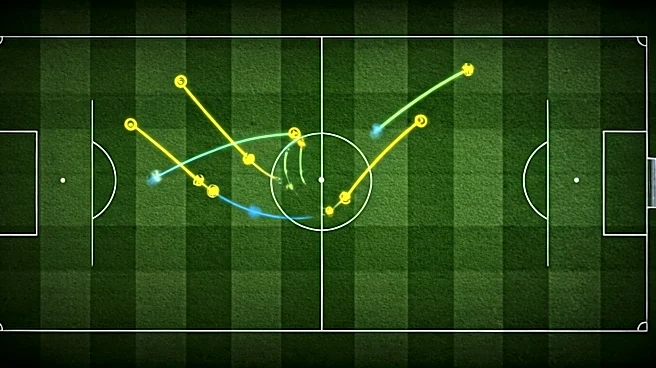
On TV, a formation is just a string of numbers—4-4-2, 4-3-3, 3-5-2. But on the field, it’s a blueprint for controlling space. It dictates who attacks, who defends, and where the crucial battles will be fought. While a starting formation tells you a coach's
initial intent, the real story often lies in the adjustments. Modern soccer is incredibly fluid, and the ability to switch formations is what separates good coaches from great ones. A change isn't just about moving players around; it’s a direct response to the flow of the game, a calculated gamble to seize control.
The Proactive Switch: Exploiting an Opponent
Often, a formation change happens before the game even kicks off. A coach known for playing a possession-based 4-3-3 might suddenly switch to a 3-4-3. Why? They’ve studied the opponent and spotted a weakness. Maybe the other team’s wingers don't track back, leaving space to be attacked. By deploying wing-backs in a 3-4-3, the coach is making a proactive move, targeting that specific flaw. It’s a chess match where the opening move is designed to dictate the terms of engagement. Top-tier teams no longer rely on a single system; they build teams that are tactically flexible, able to adapt their shape to the specific challenge in front of them.
The In-Game Adjustment: Chasing or Protecting
The most dramatic shifts happen mid-match, and they usually signal one of two things: desperation or consolidation. If a team is down a goal with 20 minutes to go, expect an attacking shift. A defensive midfielder might be sacrificed for another striker, morphing a 4-5-1 into a more aggressive 4-4-2 or even a hyper-offensive 3-4-3. This is the coach rolling the dice, prioritizing attack over defensive stability. Conversely, if a team scores to go up 1-0, you might see the opposite. An attacking winger comes off for a solid defender, and the shape compacts into a defensive 5-4-1 to protect the lead and absorb pressure. These changes are the clearest signals of a coach's immediate priority: either get a goal at all costs or prevent one.
The Tournament Arc: An Evolving Blueprint
A team's tactical plan isn't static for an entire tournament. In the group stages, where goal difference can matter, a team might play an open, attacking style like a 4-1-2-3 to maximize their chances of scoring. But once the knockout rounds begin, it's all about survival. The same team might adopt a more cautious 4-2-3-1, adding a second holding midfielder to provide extra defensive cover. This evolution shows a coach's pragmatism. The idealistic plan that got them through the group stage is shelved for a more realistic one designed to navigate the brutal, do-or-die nature of knockout soccer. The ability to win in different ways is the hallmark of a champion.
Reading the Substitutions
The personnel change that accompanies a formation shift is the ultimate tell. It’s not just about the numbers; it’s about the type of player being introduced. Swapping a creative midfielder for a hard-tackling workhorse signals a shift toward a more defensive mindset, even if the formation number stays the same. Bringing on a speedy winger for a target-man striker indicates a switch to a counter-attacking plan. These substitutions are the tools a coach uses to execute their new vision for the game. By paying attention to who comes off and who goes on, you can see the coach's plan unfolding in real-time, moving beyond the initial strategy to make the decisive adjustment that could win the cup.