





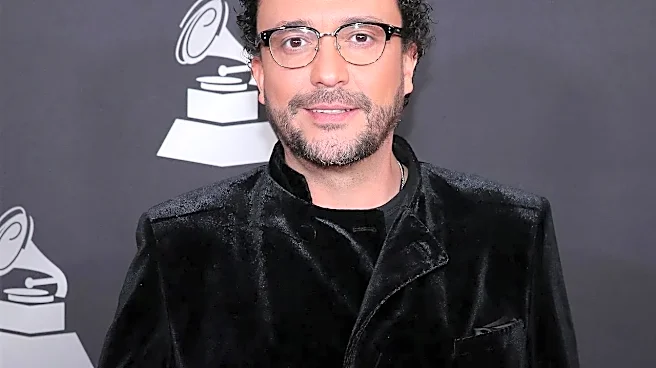

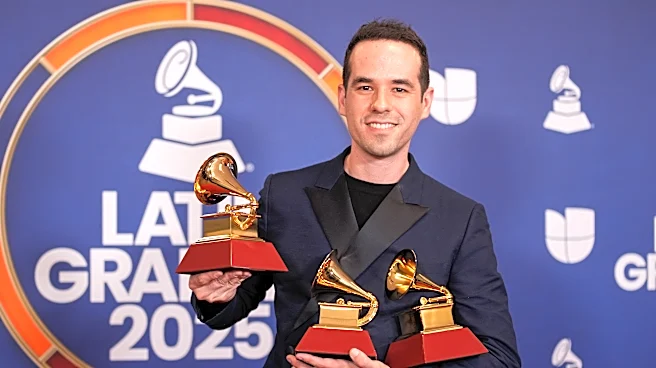
In an era dominated by reggaetón's infectious beat and global pop anthems, the quiet craftsman stands out. Jorge Drexler, a master of poetic nuance, is back in the Latin Grammy spotlight, and his latest work is a powerful statement.
The Doctor Who Became a Poet
Before he was a 16-time
Latin Grammy winner, Jorge Drexler was an otolaryngologist—an ear, nose, and throat doctor. This unlikely career path is key to understanding his music. Drexler approaches songs like a physician examining a patient: with precision, empathy, and a deep curiosity about the human condition. For over three decades, the Uruguayan-born, Madrid-based artist has built a reputation as one of the most revered lyricists in the Spanish-speaking world. He famously won an Oscar in 2005 for 'Al Otro Lado del Río', the first Spanish-language song to ever receive the award, and his acceptance speech was simply him singing the song's chorus. It was a perfect introduction to an artist who has always let his words do the talking.
The Meaning of 'Taracá'
This year, it's his album 'Taracá' that has captured the attention of the Latin Recording Academy, earning him seven nominations, tying with superstars like Karol G and Rosalía for the most nods. The album is a homecoming, recorded in Uruguay for the first time in two decades. Its title, 'Taracá,' is an onomatopoeia for the sound of the 'tambor chico,' the small, high-pitched drum in candombe, the Afro-Uruguayan rhythm that anchors the record. But the word also holds a double meaning. In the slang of his home region, it sounds like 'estar acá'—'to be here'. The album, created in the wake of his father’s passing, is a meditation on presence, grief, and reconnecting with one’s roots.
A Different Kind of Hit
Songs like '¿Como Se Ama?' ('How Do You Love?'), nominated for both Record and Song of the Year, exemplify Drexler's charm. Over a breezy, jazzy arrangement, he humorously sings about watching online tutorials to figure out how to love his partner. It's clever, warm, and deeply human—qualities that stand in stark contrast to the high-energy, beat-driven tracks that often dominate the charts. While Latin music in 2026 is more diverse than ever, with artists blending reggaetón, regional Mexican, and pop, Drexler’s work carves out a space for quiet introspection. He's less concerned with creating a global dance craze and more focused on the craft of the song itself, building intricate worlds with just a guitar and his voice.
Why Songwriting Still Reigns
The Latin Grammys have always made a distinction between Record of the Year (awarded to the artist and production team for a specific recording) and Song of the Year (awarded to the songwriter). Drexler's consistent recognition in the latter category underscores the industry's deep respect for his pen. His seven nominations for work from 'Taracá'—including Album of the Year and Best Singer-Songwriter Album—signal that even in a hyper-commercialized music landscape, there is a profound appreciation for artistry that prioritizes lyrical depth. It’s a validation that music can be both popular and poetic, and that a song's greatest power can come from the elegance of its words, not just the volume of its beat. Drexler's success is a win for every listener who believes a song should be felt, not just heard.