









The Engine Room of the Pitch
Think of a soccer team as a body. The strikers are the hands that deliver the final punch, and the defenders are the feet that provide a firm stance. The midfield? It’s the entire torso—the core that transfers power, provides stability, and dictates every
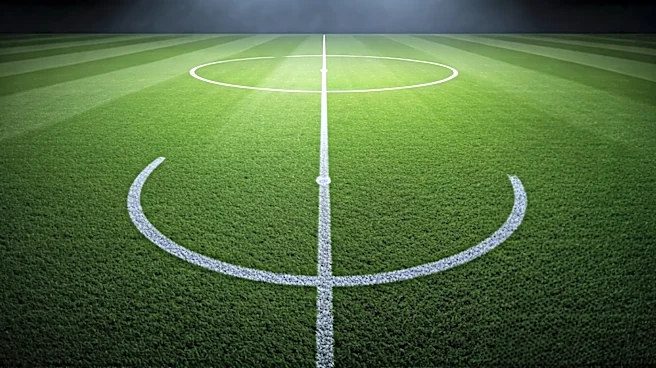
movement. The “middle” is the vast, chaotic territory between the two penalty areas. A team that controls this space controls the game’s rhythm and flow. They decide whether the tempo is a frantic sprint or a patient, probing waltz. By holding the majority of possession in the middle third of the field, a team can push the opponent back, forcing them into a defensive shell and starving their star forwards of the ball. It’s like a strategic game of king of the hill, where the winner gets to launch attacks from a position of strength while the loser is left chasing shadows.
Dictating the Two-Way Traffic
What does “control” even mean here? It’s a two-way street. Offensively, controlling the middle means having players with the vision and technical skill to connect the defense to the attack. These are the players who can receive a pass under pressure, turn, and spray a 40-yard diagonal ball to a winger, or thread a perfect pass through a sea of legs to a waiting striker. They are the team’s primary creators, initiating attacking sequences and breaking down organized defenses.
Defensively, it’s arguably even more important. A dominant midfield smothers opposing attacks before they can even begin. These players are experts at reading the game, anticipating passes, and stepping in to make crucial interceptions or tackles. This is the “dirty work” that doesn’t always make the highlight reels but is fundamental to winning. By winning the ball back high up the pitch, they not only prevent their own defense from being exposed but also create instant turnover opportunities against a disorganized opponent—the source of many modern goals.
The Holy Trinity of Midfielders
The midfield isn’t just one amorphous blob of players; it’s a specialized ecosystem. Broadly, you have three key roles. First is the No. 6, or the defensive midfielder. Think of a player like Spain’s Rodri or France’s N'Golo Kanté in his prime. This is the anchor, the shield who sits in front of the defense, breaking up plays and recycling possession. They are the team’s metronome.
Next is the No. 8, the box-to-box engine. These players have incredible stamina and contribute at both ends of the field, like England’s Jude Bellingham. They support the attack one moment and are tracking back to make a saving tackle the next. Finally, there’s the No. 10, the classic attacking midfielder or “creator.” This is the artist, the player who operates in the space behind the strikers, tasked with unlocking the defense with a moment of magic, like Belgium’s Kevin De Bruyne or Argentina’s Lionel Messi when he drops deep. A balanced, winning team usually has a world-class combination of these archetypes.
Why It's Magnified in a Cup
In a 38-game league season, a team can afford an off day. In a knockout tournament like the World Cup, one bad 90 minutes and you’re on a plane home. This is why midfield control becomes the ultimate currency. A team that dominates the middle minimizes risk. By keeping the ball, they limit the number of chances the opponent can create. This methodical control is less physically taxing than constantly chasing the ball, preserving energy for the potential of extra time and future rounds.
Furthermore, tense knockout games are often cagey, low-scoring affairs where one mistake can be fatal. A superior midfield can force that mistake from the opponent through relentless pressure, or it can provide the moment of calm and quality needed to break the deadlock. Strikers get the glory for scoring the winning goal, but more often than not, that goal was made possible by the tireless, intelligent work of the players who owned the 50 yards in the middle of the park.