



1. Petite Maman (France, 2021)
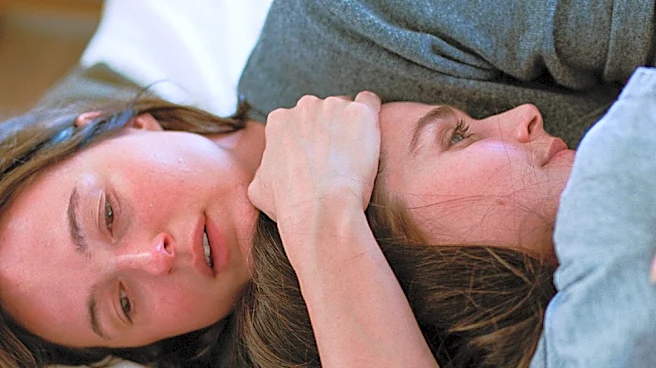
If “Aftersun” is about a daughter trying to understand her parent through the hazy filter of memory, Céline Sciamma’s “Petite Maman” offers a more magical solution. The film follows 8-year-old Nelly, who, while clearing out her late grandmother’s house,
meets a girl in the woods who happens to be her own mother at the same age. It’s a deceptively simple, 72-minute film that shares “Aftersun’s” profound interest in bridging the generational gap. It explores the poignant fantasy of meeting a parent on equal terms, as a friend, before adulthood created an unknowable distance. The film captures that same sense of a child’s quiet perception, noticing the subtle sadness in the adults around them without fully grasping its weight.
2. A Separation (Iran, 2011)
On the surface, Asghar Farhadi’s Oscar-winning drama is a tense, sprawling story about divorce, class, and the justice system in Tehran. But at its core, it shares a crucial piece of DNA with “Aftersun”: a child silently witnessing the complete fracturing of her world. The film centers on a middle-class couple’s separation and the fallout from a violent altercation, all seen through the eyes of their daughter, Termeh. Much like Sophie pieces together fragments of her father's pain, Termeh is forced to reconcile the image of her idealized father with a flawed, desperate man. It’s a masterclass in showing how family trauma and parental struggles are absorbed by children, even when the adults believe they are hiding their turmoil.
3. Shoplifters (Japan, 2018)
Director Hirokazu Kore-eda has built a career exploring the question of what truly makes a family, and “Shoplifters” is arguably his masterpiece on the subject. The film follows a makeshift family of small-time criminals living on the fringes of Tokyo society. Their bonds are not of blood but of shared necessity and affection. This resonates with the central relationship in “Aftersun,” which focuses so intensely on the powerful, self-contained world a parent and child can create. “Shoplifters” captures a similar feeling of love and tenderness existing within a deeply precarious and troubled foundation. Both films understand that a family's love can be fierce and true, even when it’s built on secrets and functions outside of society's norms.
4. The Worst Person in the World (Norway, 2021)
While its focus is romantic love and career angst rather than parental bonds, Joachim Trier’s film captures the same specific brand of millennial melancholy that courses through “Aftersun.” The film follows Julie over several years as she navigates relationships, career changes, and her own identity. What connects it to “Aftersun” is its brilliant understanding of time—how it slips away, how moments of joy are tinged with the knowledge of their impermanence, and how we are constantly becoming and unbecoming ourselves. It’s less about a singular, traumatic memory and more about the accumulation of small, life-altering moments that shape who we are. It captures the feeling of being adrift in your own life, a theme that quietly hums beneath Calum’s struggles in “Aftersun.”
5. Close (Belgium, 2022)
Lukas Dhont’s heart-wrenching film is a powerful companion piece to “Aftersun” in its exploration of unspoken emotions and the quiet tragedies of youth. The film centers on the intensely close friendship between two 13-year-old boys, Léo and Rémi, whose bond is shattered by the pressures of social conformity. Like “Aftersun,” “Close” is a masterclass in what is left unsaid. It understands that the most profound emotional devastation doesn't always come from loud, dramatic confrontations but from silent retreats, misunderstood gestures, and the slow, painful process of growing apart. It mirrors “Aftersun’s” ability to find the epic in the intimate, showing how seemingly small moments can create fault lines that last a lifetime, leaving characters to grapple with a grief they can't fully articulate.