





The Russian Blueprint
The very idea of montage, a French word simply meaning “to assemble,” was weaponized in the 1920s by Soviet filmmakers like Sergei Eisenstein. For them, it wasn't just about showing time pass. It was about creating a new, third meaning by crashing two
different images together—a concept they called intellectual montage. In his film “Strike,” Eisenstein famously intercut shots of striking workers being suppressed with images of cattle being slaughtered, creating a brutal, unforgettable metaphor that wasn't literally present in either shot alone. This revolutionary idea—that editing could create ideas and emotions, not just follow action—laid the groundwork for everything to come.
The Godfather's Baptism of Irony
For decades, Hollywood used montage mostly for practical purposes, like showing a car drive across a map. But in 1972, Francis Ford Coppola took Eisenstein’s theory of intellectual montage and perfected it for a new generation. The baptism scene in “The Godfather” is a masterclass in thematic juxtaposition. As Michael Corleone stands in a church, renouncing Satan to become a godfather in the religious sense, Coppola crosscuts to the brutal, coordinated assassinations of his rivals, anointing him as the new Godfather of the criminal underworld. The sequence doesn’t just compress time; it forges a chilling, ironic link between piety and violence, innocence and damnation, telling us everything we need to know about Michael's soulless transformation. It proved the montage could be a profound character development tool.
The Rocky Revolution
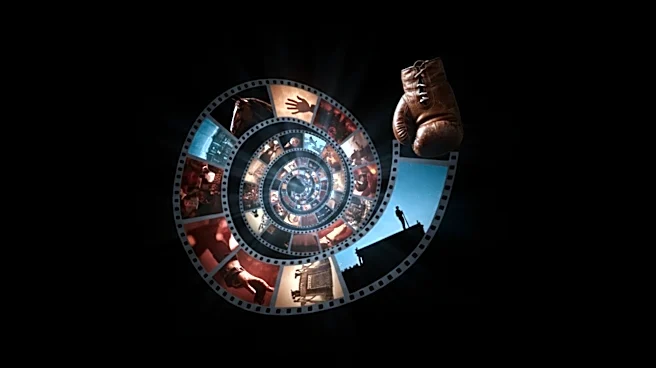
If “The Godfather” made the montage thematically sophisticated, 1976’s “Rocky” made it a universal symbol of human striving. The training montage, set to Bill Conti's soaring “Gonna Fly Now,” is arguably the most famous example in film history. It established a new cinematic language for showing transformation. In just a couple of minutes, we see Rocky, the “bum from the neighborhood,” pour his heart and soul into his training, using makeshift equipment and raw grit. The sequence culminates in his triumphant run up the Philadelphia Museum of Art steps, a moment that isn't about winning a fight, but about achieving self-worth. “Rocky” codified the training montage, creating a template of struggle, progress, and emotional payoff that has been copied, parodied, and celebrated in countless sports films and action movies ever since, from “The Karate Kid” to “Batman Begins.”
The Modern Echoes
Today, the montage is such an ingrained part of Hollywood’s DNA that we often don't even notice its components. The “getting the team together” sequence in a heist film, the “suiting up” scene in a superhero movie, or the rapid-fire depiction of a startup's rise in films like “The Social Network” all owe a debt to these earlier templates. Pixar became masters of the emotional montage, famously making audiences weep in the opening minutes of “Up” with its “Married Life” sequence. Comedies like “Team America: World Police” lovingly parodied the trope by having a song literally titled “Montage” explain what was happening. Whether it’s condensing time, building character, creating a thematic argument, or simply getting a hero ready for the final battle, the principles are the same. The shot selection, the musical cues, and the emotional arc all follow a path forged decades ago.