









Discovery, Not Exposition
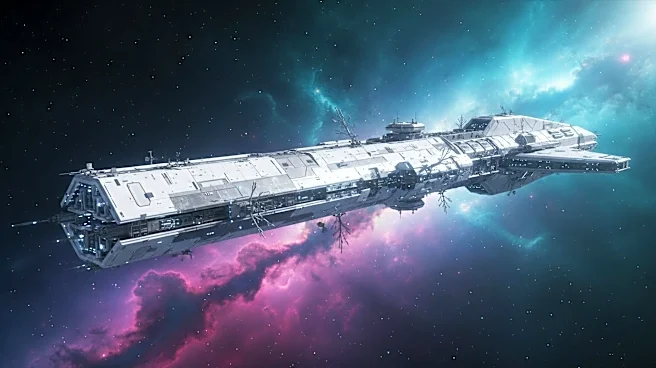
The novel opens with Ryland Grace awakening on a spaceship with no idea who he is or how he got there. This isn't just a hook; it's a brilliant narrative choice that perfectly aligns the reader's experience with the protagonist's. You and Grace are partners
in discovery from page one. Instead of a clunky info-dump about the mission to save Earth, the stakes are revealed piece by piece as Grace solves problems in his immediate environment. He doesn’t remember his name, but his subconscious retains his scientific knowledge, pushing him to figure out his purpose. This transforms exposition into a series of thrilling Eureka moments. The past isn’t just told; it’s earned, with each recovered memory serving as a reward for solving a present-day puzzle.
A Masterclass in Pacing
Andy Weir himself has admitted that using amnesia was a convenient way to structure the story, allowing him to intersperse flashbacks without it feeling like a long, unsatisfying prologue. The result is a perfectly paced dual narrative. We shuttle between the intense, lonely present aboard the Hail Mary and the frenetic, collaborative past on Earth where the mission was born. The amnesia acts as a framing device, making these jumps feel natural. The trickle of information from the past balances the tension of Grace's immediate survival challenges, keeping the narrative dynamic and preventing either timeline from feeling stale. This structure allows Weir to build a complex backstory and a high-stakes present simultaneously, a feat made possible only through the protagonist’s fractured memory.
The Engine of Character Development
More than anything, Grace’s amnesia is crucial to his character arc. It strips him down to his core: a problem-solver. Without the baggage of his past—his anxieties, his aversion to risk, and the crucial fact that he was forced onto the mission—he is free to become the hero he needs to be. He initially assumes he volunteered, creating an idealized self-image that he then has to reconcile with the truth. The conflict he feels upon remembering his own cowardice is far more powerful than if we’d known it from the start. The amnesia forces him to build a new identity based on his actions in the present, not the person he was. His journey is not about reclaiming a lost past, but about choosing who he will become.
The Ultimate Thematic Tool
Ultimately, the memory loss serves the book's central theme: identity is defined by action. Grace's initial state is a blank slate, his purpose unknown even to himself. The novel argues that who we are is not determined by our history or our intentions, but by what we do when faced with impossible choices. In the book, the memory loss is revealed to be induced by a drug used to ensure he would comply with a mission he desperately wanted to avoid. By erasing his resistance, the drug allows his better nature—his scientific curiosity and collaborative spirit—to take over. His bond with his alien counterpart, Rocky, provides the connection he lacked on Earth, empowering him to finally make the selfless choice he once ran from. The amnesia makes it possible for him to become the savior he never would have chosen to be.