

The Unseen Storyteller
Before a single scene is shot, a director and cinematographer make a choice that will define every frame of a series. It’s not just about the camera—it’s about the glass in front of it. Lenses are the show's first storytellers. They dictate not just what
we see, but how we see it. A lens can bend, stretch, flatten, or sharpen reality, creating a distinct visual language that supports the show’s themes. In an age of pristine digital clarity, many of today’s most visually inventive shows are turning to specific, often vintage, lenses to create a signature look that sets them apart from the pack. These choices are the secret sauce behind a show's unique atmosphere, turning a passive viewing experience into an immersive emotional journey.
Case Study: The Sterile World of ‘Severance’
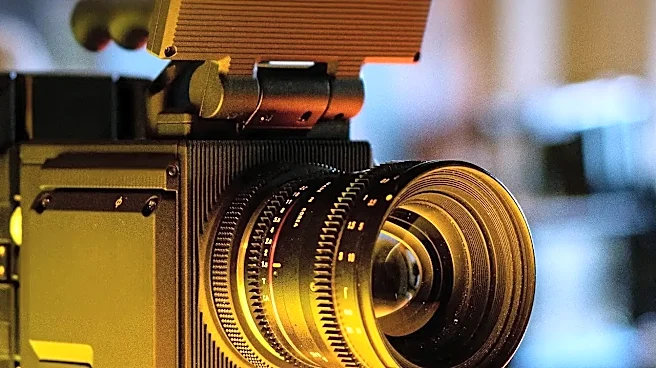
Take Apple TV+'s acclaimed series Severance. The show's central mystery is amplified by its unsettling, meticulously crafted visual style. Director Ben Stiller and cinematographer Jessica Lee Gagné needed to create a world that felt both retro and futuristic, spacious yet claustrophobic. Their solution was found in Panavision C Series anamorphic lenses. Anamorphic lenses capture a wider field of view, which is then squeezed and unsqueezed to create a widescreen image. But it’s their “side effects” that give Severance its distinct personality. The lenses create a unique, oval-shaped bokeh (the blurry part of the background) and specific horizontal lens flares that instantly feel more “cinematic” than standard television. This widescreen format, combined with extremely wide shots, makes the office workers at Lumon Industries appear small and isolated within their stark, sprawling environment.
Vintage Glass for Modern Unease
The Panavision C Series lenses used on the show are vintage glass, first produced in the 1960s. Unlike modern lenses engineered for mathematical perfection, these older lenses have quirks and imperfections. They can be a little softer on the edges or create unpredictable flares. For Severance, this was a feature, not a bug. Gagné leaned into these characteristics to create a look that feels slightly off, mirroring the characters' own fractured reality. One lens in their kit, a 50mm nicknamed the 'Silver Bullet,' was favored for close-ups because it delivered sharpness where needed but had a gentle, flattering softness. This blend of crisp detail and vintage character helps build a world that is clean on the surface but deeply unsettling underneath.
Wide Lenses and Psychological Space
Beyond the type of lens, the focal length is a key narrative tool. Severance frequently uses wide-angle lenses, which exaggerate depth and make spaces feel vast and distorted. When a character walks down a seemingly endless hallway, the wide lens makes the journey feel more daunting and psychologically strange. Conversely, a longer telephoto lens compresses space, which can be used to create a sense of surveillance or to isolate a character against a blurred background, focusing entirely on their emotional state. In Severance, the persistent use of wide compositions reinforces the themes of corporate control and individual insignificance. The camera often stays perfectly still, observing the action from a distance, making the viewer feel like a sterile, detached observer, just like the corporation at the heart of the story.