








An NFL Playbook in Disguise
When the ball goes out of bounds in soccer, the game doesn't just stop; it transforms. A corner kick, a free kick near the penalty box, or even a long throw-in are soccer's equivalent of a fourth-and-goal situation or a last-second inbounds pass in basketball.
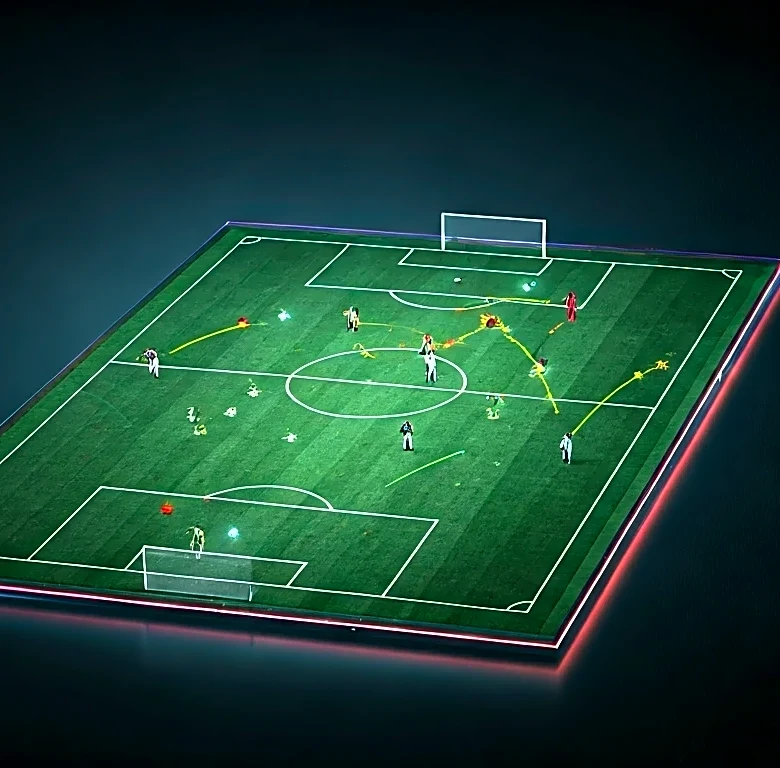
These are set pieces: moments where the game pauses, allowing teams to organize and execute meticulously rehearsed routines. Just like an NFL team scripts its first 15 plays, soccer managers and their staffs design dozens of set-piece variations. These aren't hopeful punts into a crowded box; they are choreographed sequences of movement, blocking, and deception designed to create a specific scoring chance for a specific player.
The Architects of Controlled Chaos
The beauty of the set piece is in its defined roles, much like an offensive line protecting a quarterback. You have the delivery specialist, a player like England’s former star David Beckham or modern maestro Trent Alexander-Arnold, whose job is to place the ball on a dime. Then you have the targets, often towering central defenders who charge into the box, using their size and timing to attack the ball. But the real art is in the supporting cast. There are blockers who disrupt defenders, decoy runners who create space by drawing markers away, and even players who position themselves to challenge the goalkeeper. Teams like Arsenal, under the guidance of set-piece coach Nicolas Jover, have turned these situations into an art form, consistently leading the league in goals from dead-ball situations.
The Data-Driven Revolution
For decades, the value of set pieces was underappreciated. But a data revolution has changed everything. Analytics have shown that between 20% and 30% of all goals in major leagues come from these situations. As defenses in open play have become more organized and harder to break down, exploiting set pieces has become a critical competitive edge. This has led to the rise of specialized set-piece coaches, who use video analysis and statistical modeling to identify opponent weaknesses and craft specific routines to exploit them. Teams like Brentford and Arsenal are famous for their data-driven approach, turning what once looked like luck into a repeatable science. In the 2025-26 Premier League season, for instance, a quarter of all goals came from set pieces, a testament to their growing importance.
More Than Just Scoring
While the ultimate goal is to score, the strategic value of a set piece extends far beyond that. For a team under pressure, winning a corner kick is a chance to reset, push the opposition back, and move 10 players deep into enemy territory. It's a momentum shifter. Late in a game, a team looking to protect a lead can use a corner kick to run down the clock, keeping the ball safely in the opponent's half. Some teams have even become notorious for their mastery of long throw-ins. A player with a powerful throw can essentially turn a stoppage on the sideline into the equivalent of a corner kick, causing chaos in the penalty area without the ball ever being being kicked.