









The All-American Concession Fortress
Picture a classic American sporting event—be it baseball, football, or basketball. The food experience is largely defined by what you can buy *inside* the gates. The concession stand is a fortress of convenience, designed to get you fed and back to your
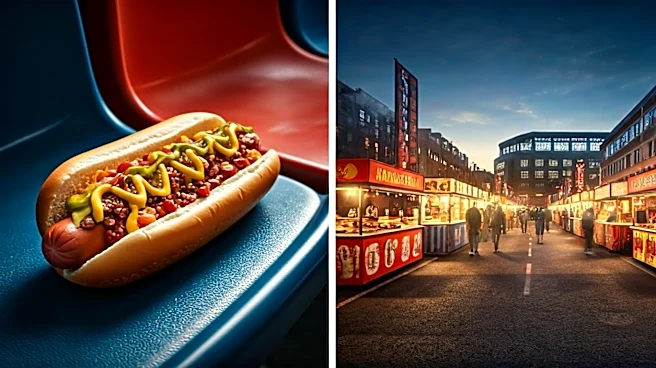
seat with minimal interruption to the game. The menu is a familiar roll call of classics: the hot dog nestled in a soft bun, a paper boat of nachos swimming in fluorescent-orange cheese sauce, the salty behemoth of a soft pretzel, and a souvenir soda cup the size of a small child. This is a food culture built on efficiency and scale. The goal is to serve tens of thousands of people in short bursts during breaks in the action. The food is engineered for portability; it can be held in one hand while you cheer with the other. While many modern stadiums now offer gourmet burgers or artisanal tacos, the underlying philosophy remains the same: the stadium is a self-contained universe, and the food is a product sold within it. The tailgate, a distinctly American pre-game ritual, exists separately, a kind of front-lawn feast before entering the commercial confines of the venue itself.
The Global Soccer Street Party
Now, fly to Munich for a Bayern match, London for an Arsenal game, or Buenos Aires for the Superclásico. The food culture isn’t waiting for you inside the turnstiles—it’s alive and kicking for blocks in every direction. The hours leading up to a major soccer match transform the surrounding neighborhood into a sprawling, open-air food market. It’s less about a transaction and more about participating in a communal pre-game buzz. In Germany, you’ll find fans crowded around grills, buying bratwurst on a crusty roll (a *Brötchen*) with a smear of sharp mustard. In the UK, the pre-game ritual often involves a pint and a meat pie from a local pub or a burger from a van that’s been parked on the same corner for decades. In Argentina, the air is thick with the smoke from parrillas grilling *choripán*—a simple but perfect chorizo sausage sandwich. This food is often hyper-local, deeply traditional, and inseparable from the identity of the club and its city. The experience is about standing shoulder-to-shoulder with fellow fans, sharing a bite and a beer before the collective march to the stadium.
A Tale of Two Philosophies
The difference isn’t just about hot dogs versus sausages; it’s a fundamental clash of philosophies. American stadium food is a centralized, top-down experience. The venue controls the menu, the prices, and the environment. You are a ticket-holder and a consumer. It’s a clean, predictable, and highly commercialized system. Global soccer food culture is decentralized and organic. It’s a bottom-up phenomenon driven by street vendors, local pubs, and generations of fan tradition. The food is part of the pilgrimage to the stadium, not a feature of the destination itself. Here, you are a supporter participating in a long-standing community ritual. The experience can be messy, chaotic, and wonderfully unpredictable. It prioritizes community over convenience and local flavor over corporate uniformity.
When Worlds Collide in the U.S.
As soccer’s popularity explodes in the United States, these two cultures are beginning to blend. Major League Soccer games offer a fascinating middle ground. Outside an Austin FC or Atlanta United match, you’ll find vibrant tailgates that feel distinctly American, complete with folding chairs and coolers. But you’ll also see the influence of global fan culture in the supporters’ marches to the stadium and the pre-game gatherings at nearby bars that feel more like a British pub scene. Inside, the concession stands are still quintessentially American, but they’re adapting. You’re more likely to find food trucks and local brewery partnerships that nod to the community-centric vibe of the global game. It’s a hybrid model, reflecting America’s unique position as it adopts and adapts the world’s most popular sport and its rich surrounding traditions.