





Breaking the Holiday Formula
For decades, the recipe for an animated holiday classic has been fairly consistent: a dose of magic, a straightforward moral, and a cozy, familiar art style. From the charming simplicity of Rankin/Bass stop-motion to countless TV specials, the goal has been comfort,
not innovation. These stories are the cinematic equivalent of a warm blanket—reliable, heartwarming, but rarely surprising. They solidified a visual and narrative language that, while effective, left little room for artistic evolution. The genre became defined by repetition, with new entries often feeling like echoes of their predecessors rather than bold new statements. This created a landscape ripe for disruption, waiting for a project that could honor the spirit of the holidays while pushing the boundaries of what a Christmas story could be.
A New Visual Language
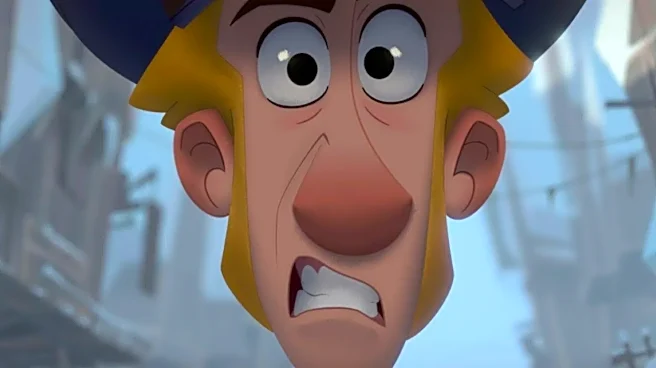
The first thing that strikes you about 'Klaus' is its look. It feels both hand-drawn and impossibly modern. This wasn't an accident. Director Sergio Pablos, a veteran of Disney's 90s renaissance, lamented that 2D animation had become trapped by nostalgia. His studio, SPA Studios, developed a groundbreaking approach. They took traditional, frame-by-frame 2D animation and integrated advanced lighting and texturing tools previously reserved for 3D CGI. This hybrid technique allowed artists to 'paint with light,' creating volumetric characters who feel fully integrated into their environments, complete with realistic shadows and textures. The result is a film where every frame feels like a piece of concept art brought to life, retaining the organic, expressive quality of drawing while achieving a new level of depth and realism. It proved that 2D animation wasn't a relic; it was a medium ready for its next evolutionary leap.
An Origin Story About Us, Not Him
Visually stunning animation can only go so far without a story to match. Here, 'Klaus' performed its most clever trick: it made a Santa Claus origin story that isn't really about Santa. Instead, the focus is on Jesper, a selfish postman, and the transformation of a grim, feuding town. Klaus himself is a secondary character, a reclusive toymaker wrestling with his own grief. Pablos intentionally sought to tell the story from a human perspective, grounding the myth in plausible actions and emotions. The magic doesn't come from flying reindeer (at first), but from the ripple effect of a single act of kindness. The film suggests that the 'Christmas spirit' isn't an external, mystical force, but something born from human connection, generosity, and the choice to bridge divides. By decentering Santa, the film becomes a more universal and poignant story about how altruism can change a community from the inside out.
The Streaming Service Advantage
An ambitious, artist-driven project like 'Klaus' might never have been made in the traditional studio system. Pablos pitched the film for years, but major studios were reportedly hesitant about a 2D animated film competing in the crowded holiday market. Netflix, however, saw an opportunity. The streaming giant was actively looking for unique holiday content that could become a perennial favorite, and it was willing to take a chance on Pablos' vision. This platform gave the film a global release without the immense pressure of opening-weekend box office numbers. It allowed a project that was artistically risky to find its audience, proving there's a strong appetite for stylistically diverse animation. The film's success, including a BAFTA win and an Oscar nomination, sent a clear message: betting on bold, creator-led projects can pay off.
What Comes After 'Klaus'?
So what is the legacy of 'Klaus'? It's a blueprint for reinvention. The film suggests that the future of holiday storytelling isn't about abandoning beloved traditions, but about finding new, more sophisticated ways to explore them. It champions artistic innovation, proving that audiences are ready for more than just the standard CGI look. It embraces emotional complexity, showing that a family film can tackle themes of grief and cynicism without losing its heart. And it makes a powerful case for narrative creativity, demonstrating that even the most well-worn myths can be told in a way that feels fresh and vital. For future storytellers, the lesson is clear: don't just retell the old stories. Find the human truth inside them, wrap it in a visual style that pushes the medium forward, and trust that the audience will follow.