

Material World: Ceramic vs. Titanium vs. Tourmaline
The material of your curling wand's barrel is the single most important factor for your hair's health and the style's finish. Ceramic is the gentle all-rounder, known for its even heat distribution that minimizes hot spots. This makes it the safest choice
for fine, color-treated, or damaged hair. Titanium, a lightweight metal, heats up incredibly fast and holds a consistently high temperature. This power makes it ideal for coarse, thick, or stubborn hair that resists curling, as it gets the job done in fewer passes. Tourmaline is often a misunderstood term; it's a crushed mineral that's infused into either a ceramic or titanium barrel. Its main job is to release negative ions, which combat frizz and seal the hair cuticle to boost shine and lock in moisture. So, a tourmaline-ceramic wand is great for frizzy, fine hair, while a tourmaline-titanium wand offers shine and power for thicker hair types.
Size Matters: Barrel Diameter and Your Desired Curl
The size of the barrel directly dictates the type of curl you’ll get. A simple rule to remember is: the smaller the barrel, the tighter the curl. For tight, defined ringlets or for styling short hair, a barrel around 3/4-inch (or 19mm) is perfect. If you want classic, bouncy, and versatile curls, the 1-inch (25mm) barrel is the universal standard that works well for most hair lengths. For those coveted loose beach waves or a soft, blown-out look, a larger 1.25-inch (32mm) or 1.5-inch barrel is your best friend, especially on medium to long hair. Tapered wands, which are wider at the base and narrower at the tip, offer more versatility, allowing you to create curls that are looser at the root and tighter at the ends for a more natural finish.
Feel the Heat: Why Adjustable Settings Are a Must
A curling wand without adjustable heat settings is a major red flag. Different hair types require different temperatures to style effectively and safely. Fine, thin, or color-treated hair is more susceptible to damage and should be styled at lower temperatures, generally between 250-300°F. For normal, healthy hair, a medium range of 300-380°F is usually sufficient. Thick, coarse, or very curly hair often needs higher heat, in the 380-450°F range, to effectively lock in a style. Using a temperature that's too high for your hair type is a fast track to damage, while using one that's too low will result in curls that fall flat quickly. An adjustable digital display takes the guesswork out of the process, giving you precise control.
Wand vs. Iron: What's the Real Difference?
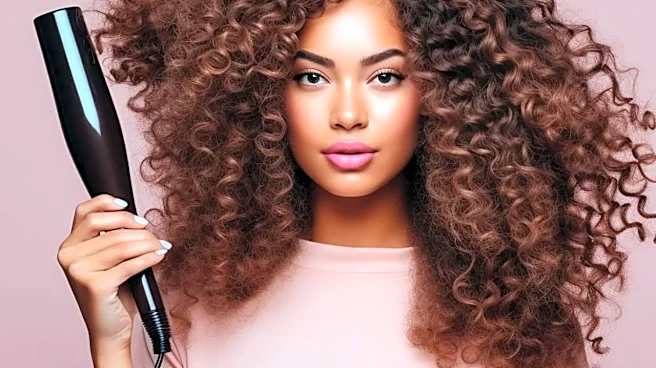
The most obvious difference is the clamp: a curling iron has one, and a wand does not. This seemingly small detail creates very different results. The clamp on an iron holds hair flat against the barrel, creating more uniform, polished, and structured curls. This can be helpful for beginners or for achieving a classic, long-lasting set. A curling wand, by contrast, requires you to manually wrap your hair around the barrel. This technique results in more natural, relaxed, and modern-looking waves, often with a less-perfect finish at the ends, which is part of the style. Wands are often faster and provide more styling freedom for a tousled look.
Don't Forget the Details
Beyond the big three—material, size, and heat—a few other features separate a great wand from a frustrating one. An automatic shut-off feature provides crucial peace of mind. A long, swivel cord prevents tangles and gives you more freedom to move. Look for a cool tip at the end of the barrel, which gives you a safe place to hold the tool for better control. Many wands also come with a heat-protectant glove, which is a must-have to prevent burns, especially when you're first learning the technique. These small quality-of-life features add up to a much better and safer styling experience.