


The Foundation: Understanding Fabric Grain
To understand the difference between these two iconic cuts, you first have to think of woven fabric as a simple grid. It’s made of threads running in two directions: lengthwise threads (the warp) and crosswise threads (the weft). These threads run parallel
and perpendicular to the finished edge of the fabric, known as the selvage. When a garment is cut along these straight lines, it’s called being cut on the “straight grain.” This method provides stability and structure because the threads are aligned in their strongest, least flexible direction. Most of your clothes, from jeans to t-shirts to structured blazers, are cut this way. It's efficient, predictable, and ideal for creating durable, shaped garments.
The Straight-Cut Gown: Structure and Formality
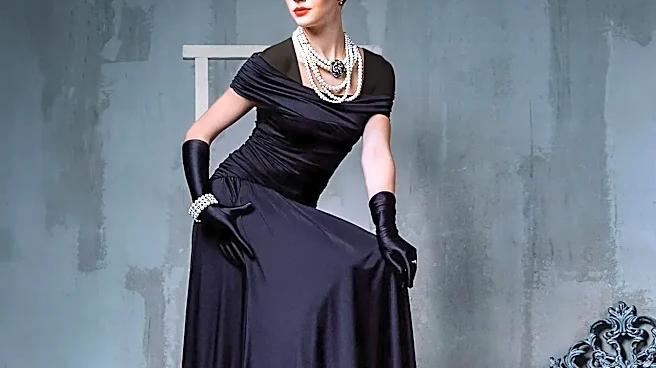
A straight-cut gown follows this traditional principle. The pattern pieces are aligned with the lengthwise or crosswise threads. This results in a garment that hangs straight down from the shoulders or chest, creating a clean, often column-like silhouette. Think of shift dresses, many formal sheaths, or traditional wedding gowns with a defined shape. The fabric behaves predictably, holding its form and creating a more architectural look rather than clinging to the body's curves. This cut is perfect for conveying formality, structure, and a certain kind of timeless elegance that relies on the silhouette of the dress itself, not how it interacts with the body inside it.
The Game Changer: The Bias-Cut
Now, imagine turning that fabric grid 45 degrees. When a pattern piece is cut on this diagonal, it's known as being “cut on the bias.” This simple change completely transforms the fabric's behavior. The diagonal orientation allows the woven threads to slide past each other, unlocking a natural stretch and flexibility that doesn't exist on the straight grain. Suddenly, a non-stretch fabric like silk satin or crepe can drape, curve, and flow in a way it never could before. This technique was famously pioneered for full-body garments by French couturier Madeleine Vionnet in the 1920s and '30s, revolutionizing fashion with her fluid, body-skimming gowns that moved with the wearer.
The Result: Fluidity, Cling, and Movement
The magic of a bias-cut dress lies in this newfound elasticity. Instead of hanging from the body, the fabric skims and contours to its curves, creating a silhouette that is shaped by the wearer. This is why bias-cut slip dresses and evening gowns are renowned for being so flattering; they hug the bust and hips while falling gracefully, creating a smooth line without constricting movement. The way the fabric hangs gives it a unique, almost liquid drape that seems to ripple and catch the light as you walk. While a straight-cut gown makes a statement with its defined shape, a bias-cut dress makes a statement with its sensuous movement and the way it celebrates the natural form.
Why It's a Mark of Luxury
This beautiful drape comes at a cost. Cutting pattern pieces on a diagonal is far less efficient, often requiring 15-25% more fabric than a straight-grain layout, leading to more waste. The fabric is also notoriously difficult to work with; it stretches, shifts, and warps on the cutting table and under the sewing needle, demanding a high level of skill and patience from the maker. Cut pieces often need to hang for 24 hours or more to let the fabric settle before being sewn. For these reasons, the bias-cut is a hallmark of more considered, luxurious, and expensive garments. It’s a deliberate choice to prioritize the fall and feel of the finished piece over the efficiency of its production.