
The Art of Letting Go
At the heart of Burning Man is a principle that feels alien in a world obsessed with permanence: “Leave No Trace.” This isn't just an environmental suggestion; it is the event's defining ethic. Participants
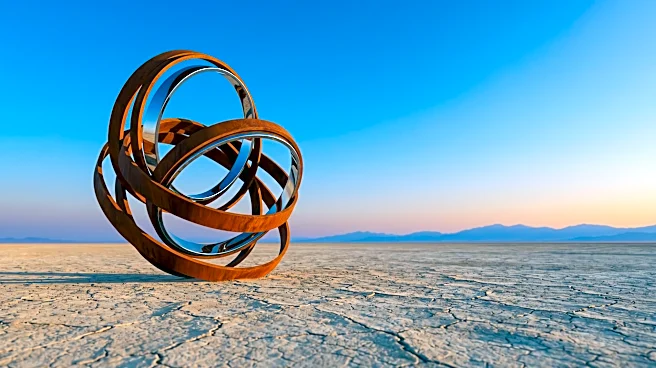
are expected to pack out everything they bring in, leaving the desert exactly as they found it. This philosophy forces a unique creative constraint. Artists can't build monuments to last for ages. Instead, they create for the now. The culmination of the week is the ritual burning of a massive wooden effigy, “the Man,” and the Temple. The Temple, in particular, serves as a space for reflection and grieving, its destruction a powerful, shared release. This act of creation for the sake of destruction flips the script on traditional art, which is often seen as precious and something to be preserved in museums. By embracing impermanence, the art becomes an experience rather than an object.
Why Fleeting Moments Stick
Our brains are wired to value scarcity. When we know an experience is a one-time-only event, we pay closer attention. Psychologists suggest that emotionally intense experiences, especially those that are fleeting, are encoded more strongly in our memory. The knowledge that a stunning art piece will be gone in days, or that a spontaneous performance will never be repeated, heightens our engagement. This creates what are known as “flashbulb memories,” vivid recollections tied to emotionally significant events. The awe of seeing a seven-story wooden sculpture of two figures embracing, like 2014’s “Embrace,” or the wonder of walking through a shimmering labyrinth that disorients the senses, becomes a powerful personal memory precisely because it was temporary. These moments are not passively consumed; they are lived, and the act of reliving them through memory makes them part of our personal story.
Echoes From the Dust
If the art disappears, how does the memory survive? Through storytelling. The most iconic moments of Burning Man—the surprise sunrise DJ sets, the mutant art cars shaped like octopuses or fish, the unscripted interactions with strangers—live on as legends. These stories are passed from person to person, year after year, solidifying a collective memory that transcends individual experience. Photography and video play a role, but they only capture a fragment. The real archive is cultural. While many large art pieces are ritually burned, some find a second life. Sculptures that once stood on the desert floor now adorn public spaces in cities like Reno, acting as physical reminders of the event's creative energy. However, the most profound legacy isn't in the objects that survive, but in the ideas they spark.
From Playa to the Mainstream
The “longest cultural memory” isn't just held by those who attend; it ripples into the wider world. The aesthetics of Burning Man—the steampunk-inspired fashion, the large-scale interactive art, the glowing LED installations—have visibly influenced everything from music festivals like Coachella to Hollywood films and corporate events. Beyond visuals, the principles of the event, such as “radical inclusion” and “decommodification,” have entered the lexicon of business and community organizing. What started as a countercultural gathering on a San Francisco beach has become a global cultural force, inspiring regional events from South Africa to Scandinavia. This influence demonstrates that the impact of an experience isn't measured by its physical duration. The temporary city in the desert has become a year-round hub for a certain kind of creativity and community that continues to evolve long after the last embers have cooled.