


The Disappearance of the Default Belt
First, let's picture the belt we’re leaving behind. For the better part of two decades, the default men’s belt was a slim, unassuming strap of leather, usually between 1 and 1.25 inches wide. Its buckle was small, its purpose was utilitarian, and its character
was, to be frank, nonexistent. It was the accessory equivalent of a background actor, there to do a job (hold up your pants) without drawing any attention to itself. This was the belt of the skinny-jean and slim-fit chino era—a time when the silhouette was tight, and any substantial accessory at the waist would have looked jarringly out of place. It was a piece of sartorial punctuation that had been reduced to a nearly invisible comma.
Defining the 'Intentional' Belt
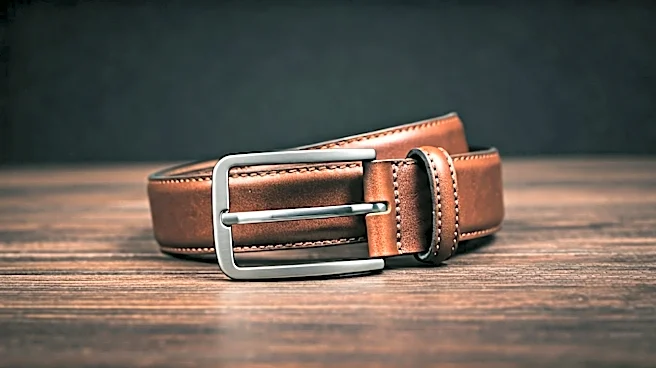
So, what does this new, 'intentional' belt look like? It’s primarily defined by its width and its restraint. We’re seeing a return to chunkier, more substantial widths, typically 1.5 inches or even slightly wider. These aren't the flashy, logo-emblazoned buckles of the early 2000s. Instead, the hardware is minimal, often a simple, elegant frame buckle in muted silver or brass. The leather itself is the star: high-quality, often with a smooth, clean finish, and in classic colors like black, brown, or tan. Think of the belts seen on the runways of The Row, Lemaire, or Prada. They aren't shouting for attention; they are asserting a quiet, confident presence. The intention comes from the fact that a belt this substantial cannot be an accident. It has to be chosen as a deliberate part of the overall look.
A Quiet Rejection of Loud Luxury
Here’s why this seemingly minor shift actually matters. The move toward wider, cleaner belts is a direct reaction to the dominant aesthetics of the last decade. It’s a quiet rebellion against the chaos of fast fashion and the overt branding of logomania. In the 2010s, status was often communicated through conspicuous logos and hype-driven streetwear. The new belt trend aligns perfectly with the broader cultural move toward 'quiet luxury' or 'stealth wealth.' In a world saturated with noise, there’s a growing appreciation for craftsmanship, subtlety, and longevity. Choosing a beautifully made, unbranded, substantial belt over a flimsy, disposable one or a loud, logo-plastered status symbol is a statement in itself. It signals a preference for timeless quality over fleeting trends, and for personal style over prescribed branding.
The Anchor of a New Silhouette
This trend isn't happening in a vacuum. It’s also a practical response to the changing shape of menswear. As men’s trousers have become looser, higher-waisted, and more voluminous, the skinny belt of yesteryear looks comically lost. A wider belt serves as a better visual anchor for these new proportions. It creates a more defined waistline and a stronger horizontal line that balances the flow of pleated trousers or wide-leg pants. Functionally, it does a better job of supporting heavier fabrics. Aesthetically, it completes the outfit with a sense of purpose. It forces the wearer to consider the midpoint of their body as a key stylistic element, rather than just the space between their shirt and their pants. It turns a utility into a cornerstone.