




The Fifteen-Minute Myth
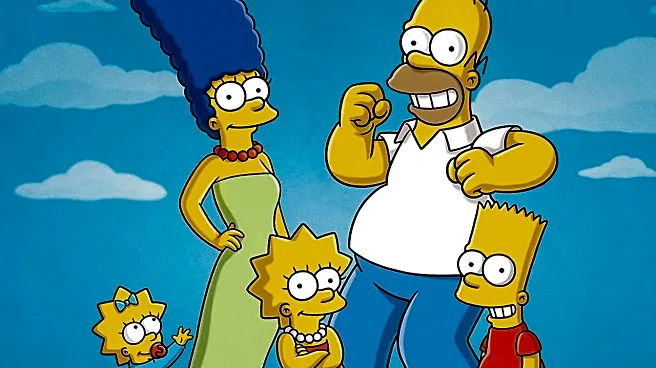
The legend goes that creator Matt Groening, panicked in the lobby of producer James L. Brooks' office, sketched out the entire Simpson family in minutes. He was supposed to pitch his popular 'Life in Hell' comic strip for a series of animated shorts on 'The
Tracey Ullman Show' but didn't want to lose the rights. So, he invented a new, dysfunctional family on the spot, naming the father after his own dad, Homer Groening. While this part is true, it was merely the starting point. The crudely drawn, angry father from those 1987 shorts was a far cry from the lovable oaf who would conquer the world. That initial drawing was a seed, not the fully-grown tree.
From Angry Dad to Lovable Idiot
The early Homer of the 'Tracey Ullman' shorts was primarily an authoritarian, often angry, and generic sitcom dad. He was domineering towards Bart and lacked the complex, childlike charm that later defined him. The transformation began when 'The Simpsons' became a full, half-hour series in 1989. It was here that co-developers James L. Brooks and Sam Simon, alongside a powerhouse writers' room, started reshaping the character. They saw the potential for more than just a grumpy father. Over the first few seasons, Homer’s sharp edges were sanded down. He became less concerned with what others thought and more driven by his own bizarre, often sweet-natured impulses. The writers realized there was a wider range of jokes and far more dramatic (and hilarious) consequences to be found in Homer's stupidity than in Bart's delinquency.
Finding the Voice (Literally)
A crucial part of Homer’s multi-year evolution was his voice. Voice actor Dan Castellaneta initially based Homer on the gruff, low-register growl of actor Walter Matthau. This worked for the short Ullman segments, but Castellaneta found it impossible to sustain for nine-to-ten hour recording sessions for the main series. More importantly, the Matthau voice didn't have the emotional range the writers were giving the character. As Homer became more emotionally volatile—swinging from rage to joy to sorrow in seconds—Castellaneta had to adapt. He dropped the voice down into his chest, allowing for a more versatile and humorous tone that could handle the character's expanding personality. It took until the second and third seasons for this new, more robust voice to fully settle into the one we recognize today.
The Collaborative Masterpiece
Homer Simpson wasn't “made” by one person, but continuously refined by a team. The writers drew from their own lives and experiences to write for him. Animators learned how to translate his unique brand of physical comedy to the screen. And Castellaneta’s performance grew in tandem with the scripts, with each side pushing the other to find new depths of comedy and pathos. The character who started as a one-dimensional angry dad had, by the fourth season, become the show's undeniable center. He evolved from a stereotype into a man who, despite being a lazy, ignorant, and often-clumsy oaf, was also fiercely protective of his family and capable of surprising moments of heart. This slow, collaborative burn is the real reason for his creation and his enduring appeal.