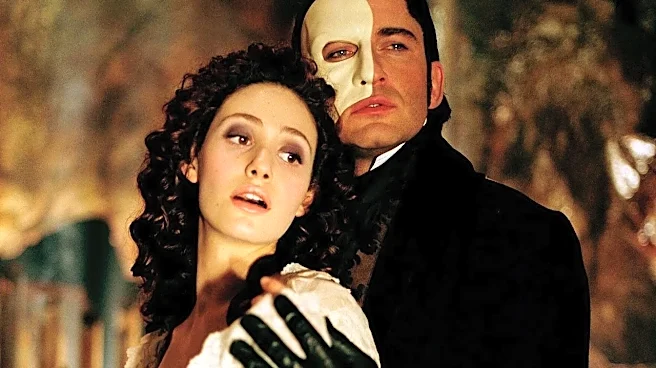










It is the undisputed titan of musical theatre, a global phenomenon seen by over 160 million people. But before 'The Phantom of the Opera' became a legend, it was a high-wire act of unprecedented ambition that nearly came crashing down at the last second.
The Weight of Unprecedented Hype
London, 1986. The anticipation for Andrew Lloyd Webber's follow-up to 'Cats' was astronomical. 'The Phantom of the Opera' wasn't just another musical; it was conceived as a sweeping, dark romance on a scale never before seen. Directed by the visionary Hal Prince, the production was a collision of gothic horror, tragic love, and groundbreaking stagecraft. Prince and his designer, Maria Björnson, were tasked with conjuring a world of Parisian opulence, shadowy catacombs, and a subterranean lake from the guts of Her Majesty’s Theatre. The show's success hinged not just on its powerful score but on its ability to create genuine magic. The pressure was immense, with every element, from the 230 costumes to the intricate sets, pushing the boundaries of what was considered possible in live theatre.
Not the Chandelier, But the Boat
When people imagine a near-disaster on 'Phantom's' opening, their minds inevitably go to the show's most famous set piece: the one-ton chandelier. Inspired by a real incident at the Palais Garnier in Paris, the crashing chandelier is the show's explosive Act I finale. And while it had its own technical headaches—it reportedly got stuck during a dress rehearsal—the real show-stopping panic came from a much more subtle, yet equally crucial, piece of stagecraft: the Phantom’s boat. During the title song, the Phantom guides Christine across a misty, candlelit lake to his underground lair. The illusion depends on a remote-controlled boat gliding serenely across a stage filled with trapdoors and smoke. It’s the moment the audience is fully transported into the Phantom's world. During final previews, just before opening night, it failed spectacularly.
A Last-Minute Scramble
The problem was as simple as it was catastrophic: the remote controls for two separate automated set pieces were operating on the same frequency. When one effect was triggered, the boat would behave erratically, ruining the ghostly illusion and posing a risk to the actors. With paying audiences and critics just days away, director Hal Prince and his team were faced with a potential crisis. The entire sequence, the very heart of the show's romantic and mysterious appeal, was unworkable. The team scrambled, working around the clock to solve the radio interference. It was a frantic, behind-the-scenes drama that mirrored the chaos of the opera house in the story itself. The solution was found at the eleventh hour, allowing Michael Crawford and Sarah Brightman to make their famous journey into the depths of the stage as planned.
The Show Goes On, and On
That the show opened without a hitch on October 9, 1986, is a testament to the invisible artistry of its technical crew. Audiences were none the wiser, completely captivated by the seamless magic unfolding before them. The boat glided, the chandelier fell, and a theatrical legend was born. It’s a classic 'show must go on' story, a reminder that for every moment of effortless grace an audience sees, there are often dozens of people backstage conquering near-disasters. This specific incident is rarely discussed, overshadowed by the more dramatic legend of the chandelier, but it was the quiet crisis that truly threatened to postpone one of the most iconic debuts in theatre history. It proves that sometimes the biggest challenges aren’t the explosive moments, but the quiet, technical details that make the magic possible.