





The Loofah: Maximum Exfoliation
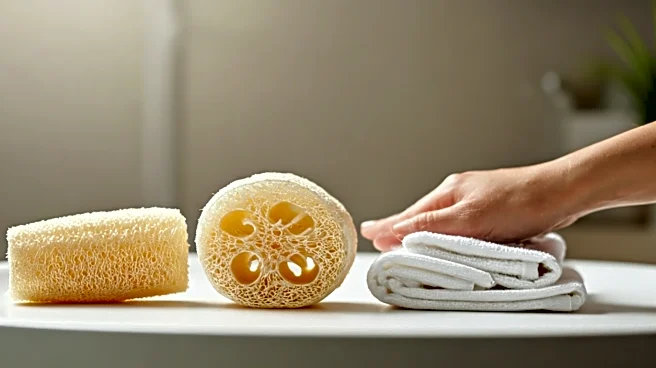
The natural loofah, derived from a gourd-like plant, is the undisputed champion of exfoliation. Its fibrous, porous texture is incredibly effective at sloughing away dead skin cells, leaving your skin feeling smooth and invigorated. If you struggle with
rough patches on your elbows, knees, or feet, a loofah can feel like a miracle worker, stimulating circulation and creating a rich, satisfying lather with just a small amount of soap. However, this porous nature is also its greatest weakness. Dermatologists frequently warn that a loofah is a perfect breeding ground for bacteria, mold, and yeast. Its many nooks and crannies trap skin cells, which become food for microbes in the warm, damp environment of your shower. Using a contaminated loofah can introduce bacteria into any small nicks or cuts, potentially leading to skin infections like folliculitis. **Done Right:** To use a loofah safely, you must be diligent. After each use, rinse it thoroughly and shake it out. Most importantly, store it outside the humid shower environment where it can dry completely. Some experts even recommend soaking it in a diluted bleach or vinegar solution weekly. And critically, replace your natural loofah every three to four weeks—or as soon as it changes color or smells musty. For plastic mesh puffs, the replacement window is slightly longer, around two months.
The Washcloth: A Balanced Approach
Think of the washcloth as the sensible middle ground. It offers a degree of mechanical exfoliation that’s gentler than a loofah but more effective than your hands alone. This makes it a great option for those who want a bit of polishing without the aggressive scrubbing. Because they are typically made of cotton or microfiber, washcloths are also less abrasive and a better choice for daily use on most skin types. The key advantage of a washcloth is its reusability and hygiene potential—*if* you handle it correctly. Unlike a loofah that is nearly impossible to sanitize completely, a washcloth can be tossed directly into the laundry. This allows you to start fresh with a clean tool every single time you step into the shower, drastically reducing the risk of reintroducing bacteria to your skin. **Done Right:** The cardinal rule of washcloth use is one and done. Use a clean washcloth for every shower, and never leave a used, damp cloth hanging in the bathroom to fester. After use, it should go straight into the hamper. To properly kill any lingering bacteria, launder your washcloths in hot water with a good detergent. This simple routine makes the washcloth a reliable and hygienic choice for a gentle-yet-effective clean.
Your Hands: The Gentlest Tool
The simplest tool is often the best, and for many, that tool is attached to your arm. Using just your hands and a quality body wash is the method most frequently recommended by dermatologists, especially for individuals with sensitive, dry, or condition-prone skin (like eczema or psoriasis). Your hands are incapable of causing the micro-tears in the skin that abrasive tools can, which helps preserve your skin’s natural protective barrier. From a hygiene perspective, your hands are the clear winner. You wash them frequently throughout the day, and they don’t have the complex, porous structure of a loofah or the woven fibers of a cloth that can trap and grow bacteria. There’s nothing to clean, nothing to replace, and nothing to store. The primary drawback is the lack of exfoliation. If you’re looking to buff away dead skin, your palms and fingers simply won’t get the job done. **Done Right:** This method is almost foolproof. Simply lather your favorite soap or body wash between your palms and massage it onto your body. The only real “rule” is to ensure your hands are clean before you begin. It’s effective, economical, and the kindest option for delicate skin, proving that sometimes the most advanced technology is the one you were born with.