






Alisson Becker (Liverpool)
On a dominant Liverpool team, long stretches of a match can pass with Alisson as a well-paid spectator. But then it happens: a lightning counter-attack, a defensive breakdown, and suddenly a striker is bearing down on him, one-on-one. This is the Alisson moment. It’s not about making a high volume of saves; it’s about making the one save that preserves a 1-0 lead or prevents a catastrophic momentum shift. Like Rivera, he isn’t asked to do everything, but he is asked to be perfect when it matters most. His value is measured in trophies won and points saved, not in the quantity of his work. His 2019 Champions League final performance, where he made eight saves to shut out Tottenham, was a masterclass in quiet, decisive dominance. When the game
is on the line, the expectation at Anfield isn't hope; it's faith in their man in goal.
Thibaut Courtois (Real Madrid)
If you want a single game to define “Rivera Pressure,” watch Thibaut Courtois in the 2022 Champions League final. He made a record nine saves against Liverpool, single-handedly willing Real Madrid to the trophy. For a club like Madrid, which is built on star power and attacking flair, the goalkeeper is the ultimate safety net. The unstated contract is: 'We’ll handle the glamour, you handle the impossibilities.' Courtois thrives under this weight. He projects an aura of impenetrable size and calm, making incredible saves look routine. Failure at Real Madrid is not an option, and for a goalkeeper, that means every shot carries the weight of the club's colossal history and expectation. Courtois absorbs that pressure and turns it into fuel, making him the definitive big-game keeper of his generation.
Ederson (Manchester City)
The pressure on Ederson is different, but no less intense. For Pep Guardiola’s Manchester City, a team that can hold 75% of possession, the goalkeeper's primary job is often preventing the one or two shots he might face all game. His concentration must be absolute. A moment’s lapse can undo 89 minutes of suffocating dominance. But his Rivera-like burden is twofold. Not only must he be a flawless shot-stopper, but he’s also the first point of City’s attack. A misplaced pass from his feet can lead to a disastrous turnover and an easy goal. He is a closer and a leadoff hitter combined into one position. The expectation is perfection in two disciplines: stopping the unstoppable and starting the attack with the precision of a world-class midfielder. It’s a unique strain of pressure that few in history have ever shouldered.
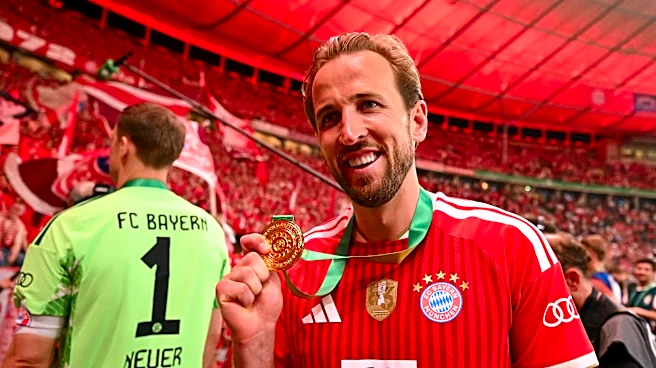
Manuel Neuer (Bayern Munich)
Before the others on this list perfected their craft, there was Manuel Neuer. He is the godfather of the modern high-pressure goalkeeper. For over a decade at Bayern Munich and for the German national team, Neuer wasn’t just expected to save shots; he was expected to redefine the position entirely. As the original “sweeper-keeper,” he played 20 yards further up the pitch than his predecessors, acting as an 11th outfield player who was also responsible for the goal. The risk was astronomical. One mistake, one miscalculation on a long ball, meant an empty-net goal and global ridicule. Yet for years, he was flawless. He gave his teams the ability to play a dangerously high defensive line, a tactical advantage built entirely on the trust that their closer would never, ever get it wrong. The standard he set is the pressure his successors now live under.
Marc-André ter Stegen (Barcelona)
While Barcelona has gone through periods of transition and defensive frailty, the one constant has been the absurdly high level of Marc-André ter Stegen. His pressure is born of necessity. For years, he wasn't just the safety net for a dominant team; he was the foundation holding up a vulnerable one. He faced more high-quality chances than his peers at other elite clubs but was still expected to produce wins. Fans and teammates looked to him not just to make the expected save, but to produce miracles on a weekly basis. His ability with his feet is elite, fitting the Barcelona model, but it’s his shot-stopping—acrobatic, reflexive, and consistently brilliant—that places him in this category. He has endured seasons where a single goal conceded felt like a failure because the team was struggling to score. That’s the burden of being the hero you can't win without.