




The Hollywood Standard of Invisibility
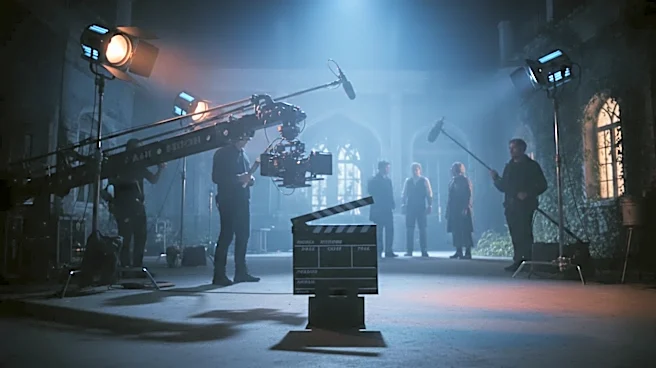
In the world of mainstream American cinema, the best editing has long been the kind you don't notice. It’s a seamless flow of images designed to make you forget you’re watching a construct. The technique, known as continuity editing, is built on a foundation
of rules: the 180-degree rule, shot-reverse-shot sequences for dialogue, and cuts that match action perfectly. The purpose is to create a smooth, coherent reality that allows the audience to suspend disbelief and immerse themselves completely in the story. It is an art of meticulous concealment, where the editor’s primary job is to hide their own work, ensuring the story unfolds with an illusion of effortlessness. This approach has powered Hollywood storytelling for generations, creating a familiar rhythm that audiences implicitly understand and expect.
A Quest for 'Ecstatic Truth'
Werner Herzog arrived on the scene with a philosophy that was a direct challenge to this tradition. He wasn't interested in the smooth, factual reality he called the “truth of accountants.” Instead, he championed the pursuit of “ecstatic truth.” This concept suggests that a deeper, more poetic and illuminating truth can be reached through fabrication, imagination, and stylization. For Herzog, editing isn't about creating a seamless narrative; it's about arranging images to provoke a feeling, a revelation, or an “ecstatic flash” of understanding. He believes that facts alone are limiting and can never truly capture the sublime or profound mysteries of human existence. This meant that editing could be jarring, hypnotic, or disorienting, as long as it served this higher, more elusive truth. He would even invent details, like a fake quote attributed to Blaise Pascal, to elevate the audience to a higher state of perception before a film even began.
Editing as Collision and Revelation
Herzog’s films are masterclasses in this philosophy. In Aguirre, the Wrath of God (1972), the editing is anything but smooth. Long, meditative shots of the jungle are punctuated by abrupt cuts that mirror the characters' descent into madness. The technical imperfections, like mismatched ambient sound, become part of the film's texture, enhancing the sense of disorientation and unease. In his landmark documentary Grizzly Man (2005), Herzog inherited over 100 hours of footage from amateur bear enthusiast Timothy Treadwell. His most famous editorial choice is a moment of profound restraint: after listening to the audio recording of Treadwell’s death, Herzog refuses to include it in the film. Instead, he shows us his own reaction and instructs Treadwell’s friend to destroy the tape. This decision, an act of not showing, becomes more powerful than any explicit imagery could ever be, forcing the audience to contemplate the horror without exploiting it. It’s a moment of pure ecstatic truth, where the editor’s moral and artistic choice shapes the film's soul.
The Herzog Effect on American Film
While you won't see Herzog’s radical style in the latest summer blockbuster, his influence has been profound, particularly in American documentary and independent filmmaking. His willingness to insert himself as a narrator and guide, blurring the lines between observer and participant, has become a hallmark of modern documentary. You can see his DNA in filmmakers who prioritize a raw, unfiltered reality, who embrace imperfection, and who see filmmaking as a philosophical inquiry rather than just storytelling. Figures in the American independent scene have long been inspired by his audacious approach. Herzog demonstrated that editing could be a tool for personal expression and thematic exploration, not just narrative assembly. He proved that an editor could be a co-author, shaping material to unearth a hidden narrative or a deeper meaning, as he did with Treadwell's footage. He gave a generation of filmmakers permission to be ruthless, to follow the material's nature, and to create something that felt raw, true, and alive, even if it broke every established rule.