







Prisoners (2013)
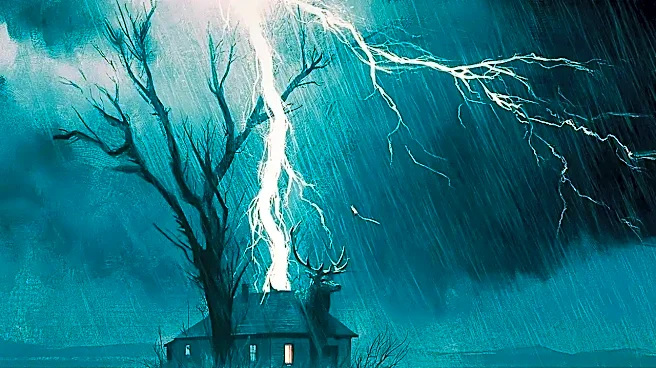
Set in the bleak days surrounding Thanksgiving, 'Prisoners' is the antithesis of holiday warmth, and legendary cinematographer Roger Deakins ensures you feel it in every frame. The film is drenched in a cold, desaturated palette of grays and muted blues,
mirroring the characters' despair and the grim Pennsylvania weather. Deakins, who was nominated for an Oscar for his work here, masterfully uses low light and deep shadows, often plunging parts of the screen into near-total darkness. This isn't just for mood; it’s a narrative tool, reflecting the moral abyss the characters are navigating. The camera is often static and observational, creating a sense of suffocating dread. Instead of a crackling fire, the key light sources are often the harsh, sterile beams of flashlights or the cold glow of a single streetlamp, making the film a masterclass in atmospheric tension.
The Ice Storm (1997)
Ang Lee's 'The Ice Storm' uses a 1973 Thanksgiving weekend to dissect the hollowness of the American suburbs, a theme brilliantly captured by cinematographer Frederick Elmes. The film’s visual language is defined by a cool, almost clinical precision. Elmes employs a palette of muted earth tones and cold blues that reflect the emotional sterility of the characters' lives. The compositions are impeccable, often using glass, windows, and reflections to create a sense of isolation and entrapment, showing characters who are physically close but emotionally worlds apart. The titular ice storm provides a stunning visual climax, coating the landscape in a beautiful but deadly layer of ice. The way light refracts through the ice-covered trees is both gorgeous and deeply melancholic, perfectly summarizing the film's take on a family and a society frozen in silent crisis.
Krisha (2015)
For a truly visceral and unsettling Thanksgiving, look no further than 'Krisha'. Shot over just nine days in director Trey Edward Shults' family home, the film is a masterwork of subjective, anxiety-inducing filmmaking. Cinematographer Drew Daniels uses a restless, roaming camera and long, unbroken takes to lock the audience into the fractured psyche of its lead character, a recovering addict attempting a holiday reunion. The camera rarely sits still, creating a sense of impending doom in the most mundane of suburban settings. Daniels also plays with different aspect ratios, subtly shifting the frame to heighten Krisha's feelings of disorientation and claustrophobia. Combined with a dissonant score, the visual approach turns a family gathering into a domestic horror show, making it one of the most stylistically bold and emotionally raw Thanksgiving films ever made.
Scent of a Woman (1992)
While it ends on a heartwarming note, much of 'Scent of a Woman' avoids typical holiday coziness for something far more grand and melancholic, set against the backdrop of a lonely Thanksgiving weekend. Cinematographer Donald E. Thorin gives the film a classical, elegant look that feels more like an old-world European drama than a contemporary American story. The New York City locations, from the opulent Waldorf-Astoria to the crisp grounds of a private school, are shot with a stately grace. The lighting is rich and often low-key, creating deep shadows that hint at the characters' inner turmoil. The film's most famous scene, the tango, is a triumph of fluid, sweeping camera movements that are romantic and impressive rather than intimate and comforting. It's a film whose beauty lies in its formal, almost theatrical presentation, a visual counterpoint to the raw emotion at its core.
Planes, Trains and Automobiles (1987)
Yes, it’s the ultimate comfort movie, but John Hughes’ classic is also a more visually deliberate film than it's often given credit for. Cinematographer Donald Peterman doesn’t just point and shoot the gags; he crafts a visual journey that emphasizes the vast, impersonal, and often lonely American landscape that separates Neal Page (Steve Martin) from his family. The wide shots of the barren, snow-dusted fields of the Midwest, the sterile uniformity of airports and bus stations, and the bleakness of a cheap motel room all serve to heighten Neal's desperation. These images create a powerful visual contrast with the idealized, warm-lit vision of the family dinner waiting for him in Chicago. The film’s look underscores the central theme: home isn’t just a place, but a feeling of warmth and belonging that stands in stark opposition to the cold, indifferent world outside.