



The GOAT: Lionel Messi
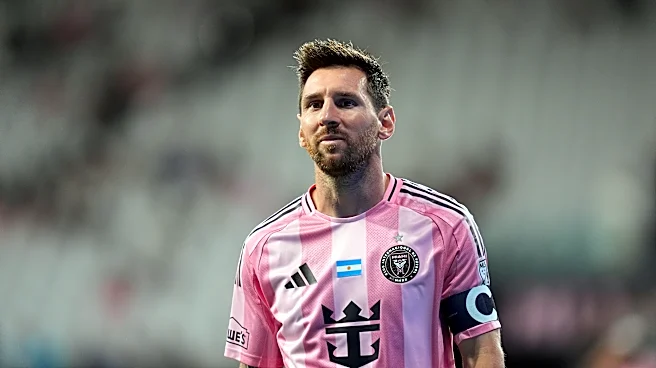
For years, the argument against Lionel Messi as the undisputed Greatest Of All Time had one glaring hole: he’d never won the World Cup. He was the quiet genius, a player whose magic felt innate, almost divine. Unlike the brash confidence of a Michael Jordan or the crafted brand of a LeBron James, Messi’s stardom was built on a foundation of pure, unadulterated talent. He didn’t need to tell you he was the best; his feet did the talking for two decades. Yet, for all his club-level dominance with Barcelona, the ultimate prize with his beloved Argentina remained elusive. He lost a final in 2014, a heartbreaking image that defined his international career. His stardom was that of a tortured artist, a king without the one crown that truly mattered
in the global court of public opinion. Then came Qatar 2022. At 35, on his last attempt, Messi delivered one of the greatest individual tournament performances in history, finally leading Argentina to glory. This wasn’t just a victory; it was a narrative completion. It cemented his stardom as the patient, humble hero who finally, through sheer perseverance and will, fulfilled his destiny. His is the stardom of earned myth, a storybook ending that silenced every remaining critic.
The Heir Apparent: Kylian Mbappé
If Messi’s journey was a marathon, Kylian Mbappé’s is a sprint. He represents an entirely different model of stardom: the prodigy who arrives fully formed. At just 19 years old, Mbappé burst onto the global stage at the 2018 World Cup and didn’t just participate—he dominated. He scored in the final, lifted the trophy with France, and instantly became the heir apparent to the Messi-Ronaldo throne. His stardom is built on explosive speed, ruthless efficiency, and a preternatural confidence. There was no slow build, no tortured narrative of near misses. He showed up and conquered. His performance in the 2022 final, where he scored a hat-trick in a losing effort against Messi's Argentina, only solidified his status. It was a passing-of-the-torch moment, even in defeat. Mbappé’s brand of stardom is modern and direct. He is the face of a new generation, a player whose physical gifts are so overwhelming that his greatness feels inevitable. He doesn't carry the emotional baggage of a long, arduous journey; he creates the baggage for his opponents. He is the future, and he’s been the future since he was a teenager.
The Showman: Neymar Jr.
Between Messi’s quiet genius and Mbappé’s raw power lies the third archetype: Neymar, the superstar as pure spectacle. More than any other modern player, the Brazilian’s fame is intertwined with his flair, his flamboyance, and the constant swirl of drama that follows him. His stardom isn't just about what he does on the field; it’s about *how* he does it. The rainbow flicks, the theatrical step-overs, the provocative celebrations—it's all part of the package. He is a walking, breathing highlight reel, a player seemingly engineered for the social media age. For Brazil, a nation that expects its heroes to play with joy and artistry (*joga bonito*), he was the chosen one. Yet, his World Cup story is one of frustration. In 2014, a back injury in the quarterfinals ended his tournament at home. In 2018 and 2022, his on-field theatrics and untimely injuries overshadowed his brilliance. Neymar represents the rockstar model of fame: immense talent, massive commercial appeal, a global brand recognized even by non-fans, but a legacy perpetually complicated by questions of what could have been. His stardom proves that in the modern game, cultural impact, personality, and brand can make you a global icon, even if the ultimate team prize remains just out of reach.