







The Perfect Blank Canvas
The upcoming *Supergirl: Woman of Tomorrow*, starring Milly Alcock, is not your typical origin story. Based on the brilliant comic series by Tom King and Bilquis Evely, it’s a space-faring journey of vengeance and healing. The plot sees a jaded, 21-year-old
Kara Zor-El team up with a young alien girl to hunt down the criminals who destroyed the girl’s planet. This quest takes them across a series of strange, forgotten, and often broken worlds. This is the key. The story is, by its very nature, an interstellar road trip. It’s not about saving Metropolis; it’s about navigating the messy, beautiful, and terrifying cosmos. This premise offers a unique gift to filmmakers: a mandate to create multiple, distinct alien environments. It's a chance to move beyond the monolithic, single-biome planets of classic sci-fi and build worlds that feel as complex and wounded as the characters themselves.
A Cure for CGI Mud
Let’s be honest: for the better part of a decade, the biggest sin of the superhero blockbuster has been visual homogeneity. Too many climactic third-act battles have devolved into a blurry mess of weightless digital characters brawling against a backdrop of generic, crumbling cityscapes or what fans derisively call “CGI mud.” It’s a visual language of expediency, not art. But we’ve seen the alternative. Think of the neon-drenched, cyberpunk dystopia of *Blade Runner 2049*, the painterly, sun-scorched deserts of *Dune*, or the glitch-art chaos of *Spider-Man: Into the Spider-Verse*. In those films, the environment is a character. The world-building tells a story of history, culture, and power before a single line of dialogue is spoken. For *Supergirl*, this isn't just an aesthetic choice; it’s a thematic one. Kara Zor-El is a refugee from a dead world. The emotional core of her character is tied to the concept of place, loss, and memory. The film can make us *feel* the tragedy of Krypton by showing us other worlds in various states of decay or vibrancy.
Let the Worlds Tell the Story
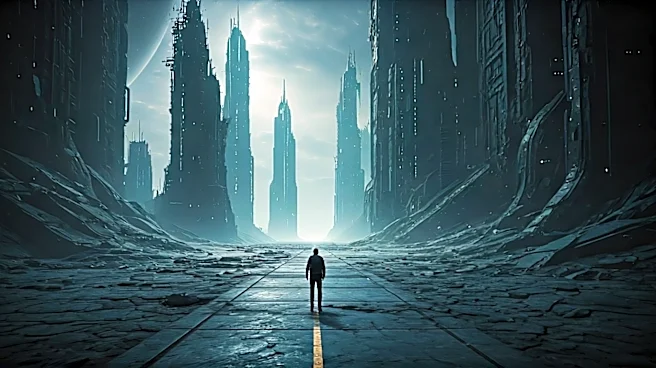
What does a “dying world” look like? The headline’s prompt is the central creative challenge. It doesn’t have to mean asteroids and explosions. A dying world could be a planet of stunning beauty, but one whose inhabitants have forgotten their history, living in sterile apathy. It could be a world strip-mined for its resources, leaving behind a scarred but functional society that has traded its soul for survival. It could be a world locked in a permanent, pointless war, where the architecture itself is purely defensive and brutalist. Each planet Supergirl visits can be a mirror, reflecting a different aspect of trauma and survival. A world that has successfully rebuilt itself from a catastrophe might give her hope. A world that has surrendered to nihilism might test her resolve. The production design—from the color palette and architecture to the very quality of the light—can externalize the internal struggles of the characters. It transforms the setting from a passive backdrop into an active participant in the drama.
Setting the Tone for the DCU
This isn't just about making one good movie. It’s about establishing a new philosophy for the entire DC Universe. By giving *Supergirl* a distinct, artistic, and varied visual identity, DC Studios can signal that its universe will be a place of creative diversity. Superman’s Metropolis can feel bright and optimistic. Batman’s Gotham can remain a gothic nightmare. And Supergirl’s corner of the cosmos can be a weird, wonderful, and dangerous frontier. Allowing directors and their design teams to build unique visual languages for different characters and settings is what will make the DCU feel vast and lived-in, rather than like a series of interconnected soundstages. *Supergirl: Woman of Tomorrow* has the chance to be the flagship for this new approach, proving that the cosmic can be as personal and artistically rendered as the terrestrial.