






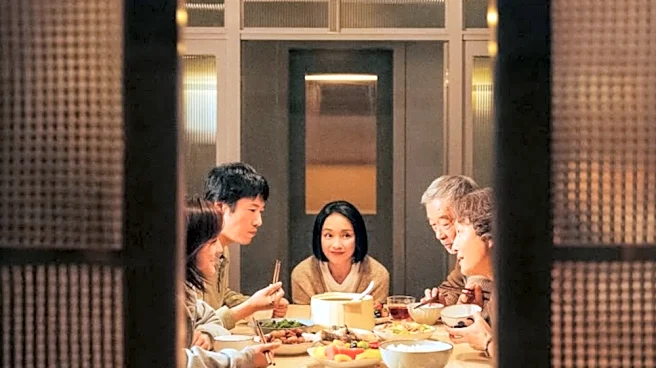

1. The Pressure-Cooker Setting
The first ingredient is almost always a confined space and a ticking clock. These stories rarely sprawl across continents; they unfold in a single family home, a vacation cabin, or a small town over a compressed timeline like a holiday weekend or a wedding.
This structure, known in screenwriting as a "pressure cooker," forces characters into proximity. There's no escape from the awkward breakfast conversations, the passive-aggressive comments over dinner, or the late-night encounters in the hallway. By trapping its characters together, the narrative strips away their daily routines and support systems, leaving them with nothing but their shared history and unresolved issues. This enforced intimacy ensures that buried tensions have no choice but to surface, creating a fertile ground for the drama that follows.
2. A Roster of Familiar Archetypes
Great family dramas often rely on a recognizable cast of character types, which function as narrative shorthand for specific emotional roles. You have The Golden Child, who carries the weight of parental expectations; The Black Sheep, who returns home trailing chaos and resentment; and The Peacemaker, who desperately tries to smooth over every conflict. You'll often find a Stoic Patriarch holding a secret, or a Matriarch whose love is both a comfort and a weapon. These archetypes aren't clichés; they are deeply rooted psychological roles that exist in many real families. Viewers instantly recognize the dynamics at play—the favoritism, the sibling rivalries, the burden of being the responsible one. This familiarity allows the writer to dive straight into the heart of the conflict without wasting time on excessive backstory.
3. The Unspoken Thing Everyone Knows
At the core of nearly every great family drama is a central secret or an old wound—the proverbial elephant in the living room. It could be an old affair, a business betrayal, a long-held grudge, or a traumatic event that was never properly addressed. While the characters might spend the first act talking about anything but the issue, its presence informs every interaction. The dialogue crackles with subtext, where what isn't said is more important than what is. This technique builds suspense and gives the audience a privileged position; we can see the iceberg under the water long before the characters are willing to acknowledge it. The entire narrative then builds toward the moment of catharsis when the secret is finally spoken aloud, leading to the inevitable confrontation.
4. The Explosive Climax and Quiet Aftermath
All of these elements—the setting, the characters, the central secret—are designed to culminate in one explosive scene. This is often the Thanksgiving dinner fight, the dramatic wedding toast, or the tearful graveside confession. It’s the moment the pressure cooker finally bursts. Every unspoken resentment, every secret, and every long-held frustration comes pouring out in a torrent of emotion. But the mark of a truly great family drama isn't just the explosion; it's the quiet that follows. After the shouting is done, there's a scene of fragile resolution. Two characters might share a quiet moment on the porch, an awkward hug, or a simple, understated line of dialogue that signals a tiny shift in their relationship. It's rarely a perfect happy ending, but it offers a glimmer of understanding and the possibility of healing, which is what makes these stories feel so deeply human and true.