





The Curse of Two Perfect Endings
Let’s be honest: the *Toy Story* franchise has already given us two of the most definitive goodbyes in cinema history. *Toy Story 3* was a perfect, heartbreaking farewell. As a college-bound Andy gave his beloved toys to a new child, Bonnie, it was a poignant
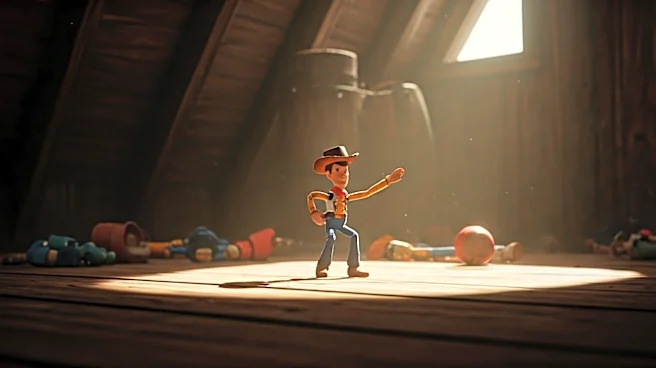
meditation on growing up and letting go. The final wave, the shared glance between Andy and Woody—it was a flawless punctuation mark on a generation’s childhood. For millions, that was the end. The story was complete. Then came *Toy Story 4*, a film many met with skepticism but which managed to deliver a surprisingly resonant epilogue. It wasn’t about Andy anymore; it was about Woody. The film gave our favorite sheriff a new, independent purpose, letting him ride off into the sunset (or, more accurately, the carnival night) with Bo Peep. It was a different kind of ending, one about self-discovery after a lifetime of service. In doing so, it effectively split the core duo of Woody and Buzz Lightyear, seemingly for good. So now, the franchise has two emotionally satisfying conclusions to overcome. A fifth film doesn’t just have to be good; it has to justify reopening a book that has already been beautifully closed, twice.
Enter Pixar Royalty
If anyone can tackle this daunting task, the argument goes, it's Andrew Stanton. This isn’t a hired gun or a rising star being handed the keys. This is the guy who was in the room where it happened from the very beginning. Stanton co-wrote the first three *Toy Story* films, giving him a deep, instinctual understanding of these characters. More importantly, he directed two of the studio's most revered original masterpieces: *Finding Nemo* and *WALL-E*.
Those films demonstrate his mastery of balancing epic scope with intimate emotion. *WALL-E* told a universe-spanning love story with barely any dialogue. *Finding Nemo* turned a father’s search for his son into a hero’s journey across an entire ocean. Stanton doesn't just make sequels; he builds worlds and finds the soul within them. His return isn't just a job—it's a legacy play. It signals that Pixar knows the stakes are astronomically high and is deploying one of its most trusted storytellers to protect its crown jewel.
The Corporate Mandate vs. The Story
The central tension of *Toy Story 5* is one that defines modern Hollywood: is this film being made because there's a vital, untold story, or is it because the intellectual property is too valuable to leave dormant? Disney CEO Bob Iger has been transparent about leaning into successful franchises. From a business perspective, a new *Toy Story* is a no-brainer. But for audiences, and for the artists at Pixar, that can feel like a creative dead end. The magic of early Pixar was its commitment to bold, original ideas.
Stanton's challenge, then, is to reverse the gravity of the corporate mandate. He must find a narrative spark so powerful and so authentic that it makes the audience forget the business logic entirely. He has to make us believe that Woody, Buzz, and the gang *had* to come back, that their story wasn’t truly over. Anything less will feel like a cash grab, a betrayal of the very legacy the film is meant to honor. It’s a battle for the soul of the franchise, fought on the storyboard.
What Would 'Necessary' Even Look Like?
So, what could possibly constitute a “necessary” plot for *Toy Story 5*? It’s unlikely to be another “lost toy” adventure. Thematic territory is the only ground left to break. The most obvious path is reuniting Woody and Buzz, but doing so would risk invalidating Woody’s hard-won independence from *Toy Story 4*. Perhaps the story lies with Andy. A film about a grown-up Andy rediscovering his toys, or having children of his own, could tap into a powerful new dimension of nostalgia and parenthood—a theme Pixar has always excelled at exploring.
Alternatively, the necessity could come from a new kind of threat or a philosophical question the toys haven't faced. What happens when a toy’s existence is threatened not by being lost or outgrown, but by digital obsolescence? How do analog toys survive in an iPad world? Stanton's genius lies in finding the human (or plastic) heart in big ideas. His success will depend on finding a theme so universal and compelling that it makes a fifth chapter feel not just welcome, but essential.