









The Golden Age of Anxiety
The disaster genre as we know it was truly forged in the 1970s. Films like The Poseidon Adventure (1972) and The Towering Inferno (1974) weren't just about spectacle; they were a direct reflection of the era's mood. Coming out of the turbulent 1960s,
and grappling with the Vietnam War and the Watergate scandal, American society was experiencing a profound crisis of faith in its institutions. The disaster movie provided a perfect, contained stage for these anxieties. The catastrophe in these films is often triggered by human arrogance or greed—a ship pushed too hard, a skyscraper built with cut corners. This narrative resonated with an audience that felt its leaders were failing them. The films presented a world where traditional authority was useless, forcing a motley crew of ordinary citizens, led by a determined, often blue-collar hero, to rely on their own grit and ingenuity to survive.
An Unbreakable Formula Is Cast
Beyond the social commentary, the 1970s cemented a narrative formula that remains remarkably durable. The first ingredient is the all-star ensemble cast. Filling a doomed airplane or burning building with famous faces wasn't just about marketing; it created a cross-section of society, with each character representing a different archetype. You had the skeptic, the selfish coward, the stoic leader, and the faithful believers, allowing the audience to watch a mini-morality play unfold amidst the chaos. A key trope established here is the lone expert whose dire warnings are ignored by complacent authorities—a powerful fantasy for anyone who's ever felt unheard. The plot almost always involves the fracturing and eventual reunification of a family unit, often a divorced couple brought back together by the crisis. This provides an intimate, emotional core that grounds the large-scale destruction, making the stakes personal rather than abstract.
The 90s CGI Revolution
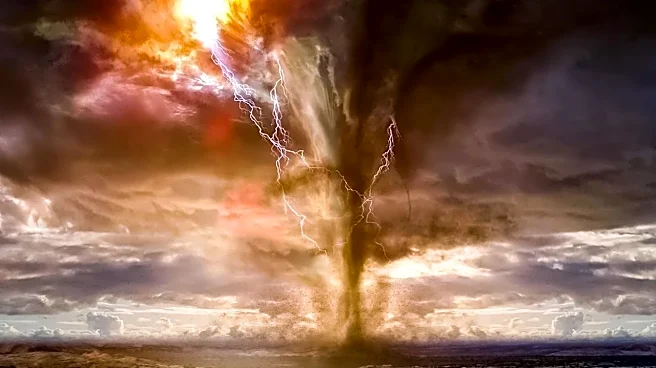
After fizzling out by the late 70s due to oversaturation, the genre came roaring back in the 1990s, supercharged by a technological breakthrough: computer-generated imagery (CGI). While 70s films relied on clever practical effects and miniatures, CGI allowed filmmakers to dream bigger. Films like Twister (1996) and Independence Day (1996) could now depict destruction on a global, previously unimaginable scale. The focus shifted from contained, personal stories like a capsized ship to entire cities being wiped out by aliens or extreme weather. This new wave of films created a box-office arms race, with studios releasing competing disaster flicks in the same summer, like Volcano and Dante's Peak in 1997, followed by Armageddon and Deep Impact in 1998. The spectacle became the main draw, sometimes overshadowing the human drama that was central to the genre's first wave.
The Strange Comfort of Catastrophe
So why do we keep coming back to watch the world burn? Psychologically, disaster films offer a form of safe, manageable catharsis. In an era of constant, low-grade anxiety about real-world threats—from climate change to pandemics—these movies provide a space to process those fears with a guaranteed resolution. No matter how dire the situation, the story almost always ends with order restored and a handful of heroes surviving to build a new world. They are exercises in what psychologists call defensive pessimism, allowing us to confront worst-case scenarios from the safety of our couch. The films are not really about the disaster itself; they're about the fantasy of competence, community, and human resilience in the face of overwhelming chaos. They reassure us that even when everything falls apart, a few good people can put it back together.