









Beyond the Trident-Wielding Tyrant
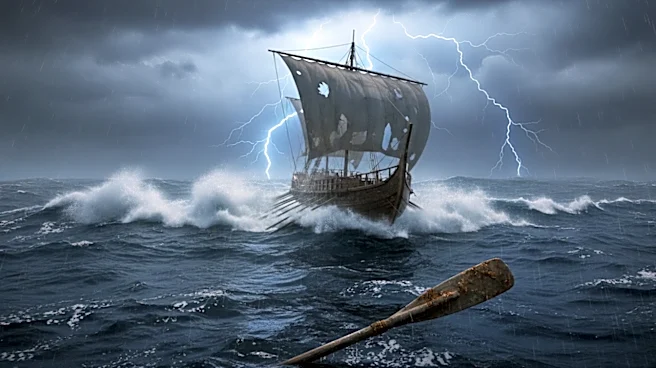
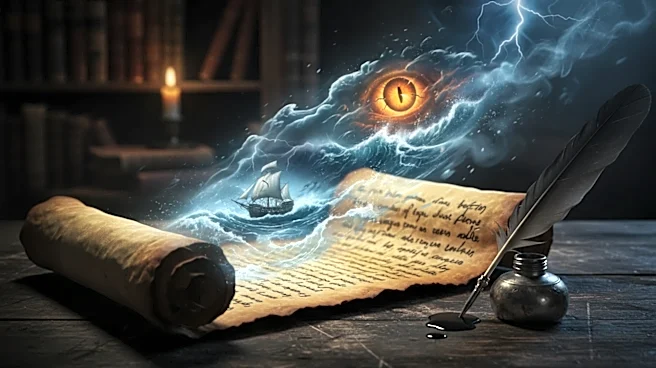
Let’s be honest: Poseidon has a bit of a PR problem. Thanks mostly to Homer's Odyssey, where he serves as the primary antagonist relentlessly tormenting Odysseus, he’s been typecast as the ultimate divine obstacle. In this story, Odysseus blinds Poseidon’s
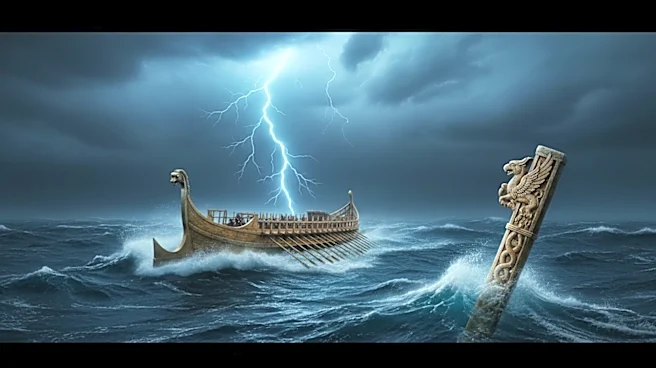
son, the Cyclops Polyphemus, and the sea god spends the next decade making the hero’s life a living nightmare with storms and monsters. It’s an epic grudge match that cemented his reputation as a vengeful and violent force. This portrayal is so powerful that it often eclipses his other roles. When modern pop culture needs a quick mythological heavy, Poseidon is an easy choice. He’s the personification of the destructive, unpredictable power of the ocean. But reducing him to this one-note role is like saying Zeus is only about lightning bolts; it’s true, but it misses the whole picture. The ancient Greeks had a much more nuanced view, worshipping him as a protector of seafarers even as they feared his wrath.
The Shaker of Earth and Giver of Horses
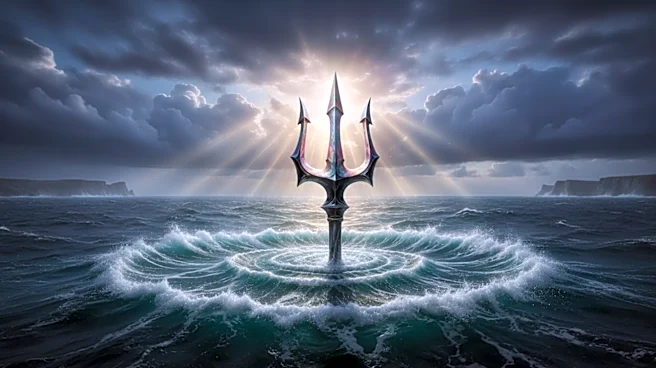
One of the first things to know about Poseidon is that his domain wasn't just the sea. He was known as the “Earth-Shaker,” the god of earthquakes whose trident could split rocks and draw forth springs. This dual power over both land and sea makes him a far more elemental and terrifying force—not just a god of water, but a god of raw, untamable geophysical power. In some cults, he was even worshipped as a protector against the very earthquakes he could cause. Even more creatively, Poseidon was revered as the creator and tamer of horses. One myth tells of him creating the very first horse to impress the goddess Demeter. Another links him to the famous winged horse Pegasus, who was born from the blood of Medusa after her fateful encounter with Poseidon. This association connects him not just to wild nature, but to civilization, warfare, and transport—things that are foundational to human society. A story that includes Poseidon could explore him as a god of both devastating chaos and generative creation.
A Complicated Family Man
Like many Greek gods, Poseidon's family life was messy, but it was also a source of rich narrative potential. He wasn't just the father of monsters like the Cyclops. In some traditions, he is named as the divine father of the great Athenian hero Theseus, who famously slew the Minotaur. His children ranged from giants and savage creatures to the founders of royal families and kings across the Greek world. He was married to the sea nymph Amphitrite, and together they had a son, Triton. This makes him a complex patriarchal figure—a progenitor of both heroes and horrors, capable of both deep love for his offspring and terrible rage when they were harmed. A story could use this duality to create compelling internal and external conflicts, moving beyond a simple good-versus-evil dynamic.
The Civic Founder and Ambitious King
Poseidon wasn't just a wild force of nature; he was also a political player with ambitions on land. The most famous example is his contest with Athena for patronage of the city that would become Athens. Poseidon struck the Acropolis with his trident and produced a spring of salt water, offering the city naval power. Athena countered by planting the first olive tree, a gift of peace and sustenance. The Athenians chose Athena's gift, and in a fit of rage, Poseidon flooded the surrounding plain. While he lost, the story shows him as a civic founder, a deity who wanted to build and rule, not just destroy. He was a chief god in other major cities like Corinth, where athletic games, including horse races, were held in his honor. This presents him as a rival king, a peer to his brother Zeus, with his own ambitions and strategies, making him a far more interesting political and narrative foil.