


The Art of Invisibility
In filmmaking, the most powerful makeup is often the most subtle. Its primary job isn't to be seen, but to be felt. It’s a silent narrator, guiding our perception of a character without pulling focus from the performance. When makeup calls too much attention
to itself—a lumpy prosthetic, an unnatural wig, or an effect that just looks “off”—it breaks the audience's immersion. The true artistry lies in serving the story. Makeup artists collaborate with directors and actors to build a visual identity that feels authentic to the character's world and emotional journey. Whether it's adding a light sheen of sweat to show anxiety or subtly hollowing out an actor's cheeks to signal exhaustion, the goal is always realism that enhances, rather than overshadows, the narrative.
More Than Just Wrinkles
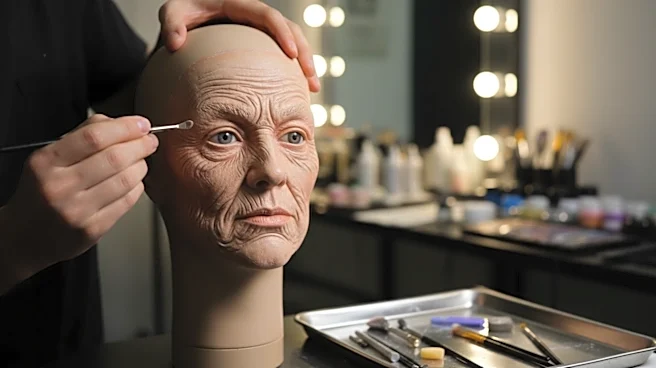
Aging a character on screen is one of the craft's greatest challenges, and it goes far beyond simply drawing on wrinkles. Artists are meticulous students of time. They use techniques like stippling to create realistic fine lines and silicone prosthetics for sagging skin. But it’s the finer details that truly sell the illusion: the subtle discoloration of age spots, the way skin thins over bone, and the translucent quality it takes on. Projects like “Maestro,” where Kazu Hiro transformed Bradley Cooper into an elderly Leonard Bernstein, or Gary Oldman’s Oscar-winning turn in “Darkest Hour,” showcase this dedication. The makeup doesn’t just make them look old; it captures the weight of a life lived, allowing the performance to shine through the artistry. In high-definition, this kind of realism is non-negotiable.
The Anatomy of an Injury
Like aging, creating believable injuries is an art form rooted in science. A movie punch doesn’t just result in a splash of red. A professional artist knows the precise lifecycle of a bruise, from the initial reddish impact to the purple, green, and yellow stages of healing. They understand the difference between a clean slice and a jagged tear, and how blood congeals versus how it flows. This knowledge is crucial for maintaining continuity, especially when scenes are filmed out of order over weeks. From the infected bites in “The Last of Us” to the grimy wounds of an action hero, every injury tells a story of what a character has endured. The effect is so convincing that we don't see the makeup—we see the consequence.
Building Character From the Outside In
Ultimately, makeup is a fundamental tool for building character. It's the first thing an audience sees, forming an immediate impression before a single word is spoken. A character's makeup can signal their wealth, health, lifestyle, or state of mind. Think of the way a polished, clean look can convey authority, while smudged eyeliner and pale skin might suggest a character is unraveling. The transformation of Charlize Theron in “Monster” is a classic example where makeup helped erase a glamorous movie star and reveal a deeply troubled individual. This is the ultimate power of the craft: to use powders, paints, and prosthetics not just to change a face, but to reveal a soul.