





The Myth: More Ball, More Goals
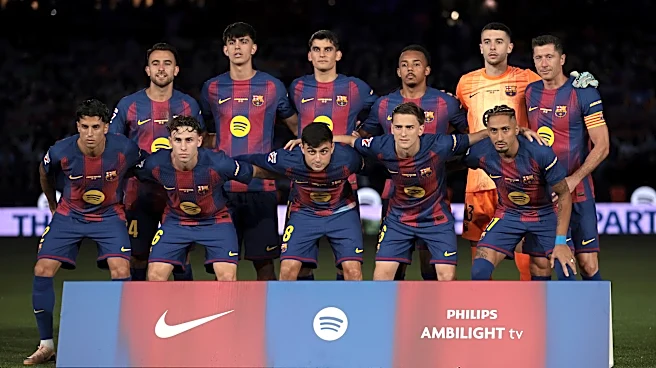
The logic behind valuing possession is intuitive and deeply ingrained in how we watch sports, especially soccer. If your team has the ball, the other team can’t score. Control of the ball feels like control of the game. For years, this philosophy was championed by some of the world's most successful teams, most notably Pep Guardiola’s Barcelona. Their 'tiki-taka' style, built on short, rapid passing and overwhelming possession, became the gold standard. They didn't just beat teams; they suffocated them, starving them of the ball until an inevitable defensive crack appeared. This era cemented the idea in the public consciousness: possession equals dominance, and dominance equals winning.
The Reality: Not All Possession is Created Equal
The problem with the 'possession is everything' mindset
is that it fails to distinguish between threatening and non-threatening control. A team can rack up 70% possession by simply passing the ball sideways between defenders in their own half. This is often called 'sterile domination'—it looks impressive on the stats sheet but creates zero danger to the opponent. The 2018 World Cup provided a brutal lesson for Spain, the masters of possession. In their Round of 16 match against Russia, the Spanish team completed over 1,000 passes and held the ball for 79% of the game. They lost on penalties. Their possession was passive and predictable, allowing the Russian defense to sit comfortably in a low block and wait for their chance. It was a perfect, and painful, illustration that what you do with the ball matters far more than how long you have it.
The Power of the Counter-Attack
While some teams build their identity on having the ball, others have built dynasties on thriving without it. The counter-attacking style is a direct rebuke to the possession-at-all-costs philosophy. Managers like José Mourinho and Diego Simeone have perfected the art of strategic surrender. Their teams willingly cede possession, inviting the opponent to push forward and commit players. They maintain a disciplined, compact defensive shape, absorb pressure, and then, upon winning the ball back, they strike with lightning speed and lethal precision. One of the most famous examples is Celtic's 2-1 Champions League victory over Barcelona in 2012. Barcelona had 84% possession and completed nearly 900 passes. Celtic had just 16% and won. They proved that you don't need the ball to control a game's outcome; you just need to control the spaces and moments that matter.
Beyond Possession: The Stats That Tell a Better Story
As analytics in sports has grown more sophisticated, analysts and fans alike have started looking beyond simple possession stats. The modern metric that gives a much clearer picture of dominance is Expected Goals (xG). Instead of measuring time on the ball, xG measures the quality of scoring chances a team creates. A shot from six yards out in the center of the goal will have a high xG value (say, 0.40 xG, meaning a player would be expected to score from that spot 40% of the time). A hopeful shot from 35 yards out might have a value of 0.02 xG. By tallying up the xG of all the shots a team takes, you get a much better sense of who 'deserved' to win, regardless of who passed the ball around the midfield more. Other key stats include progressive passes, touches in the opposition's penalty area, and pressures—all of which measure intent and effectiveness, not just presence.