







The Camera Is the Real Audience
The first rule of any major televised performance is that the most important audience member is the camera. While thousands of fans might be in the arena, every element of a VMA performance is built to be seen through a specific lens. The director, artists,
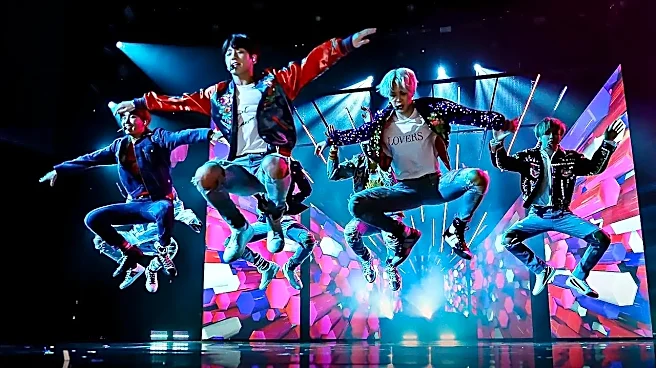
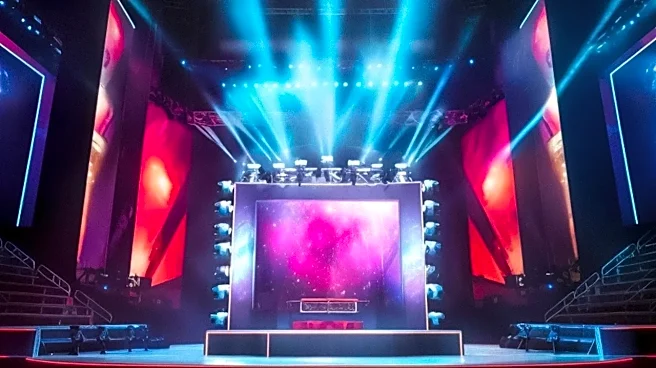
and choreographers work together in a process called 'blocking' to ensure every movement is optimized for the broadcast. What looks like a chaotic mosh pit to the live audience is often a meticulously planned scene designed for a single, sweeping camera shot. Production designers for major awards shows frequently use multiple stages—sometimes as many as four or six—to create distinct looks. As one artist performs on the main stage, the next act is already setting up on a secondary stage, hidden from the live cameras by massive LED walls or clever lighting until it's their turn to go live.
Forced Perspective Creates Fake Scale
Not all stages are built the same, especially when they only need to look good on TV. Production designers are masters of forced perspective, a technique that uses optical illusion to make objects appear farther away, closer, larger, or smaller than they actually are. This has been a staple of theater for centuries. For a televised performance, a ramp might be built to get steeper as it goes back, or background set pieces are made progressively smaller. To the camera, this creates an artificial sense of immense depth that doesn't really exist. An artist walking up a short, 20-foot ramp can look like they're ascending a massive structure. Paired with wide-angle lenses, this trick turns a confined stage into a sprawling landscape, making the performance feel truly epic.
Augmented Reality Adds Digital Magic
When you see dazzling graphics, floating objects, or impossible effects that seem to interact with a performer, you're likely seeing augmented reality (AR) at work. These digital elements are added to the live broadcast feed in real time and are completely invisible to the audience inside the arena. Artists perform against a physical stage, but for viewers at home, that stage is enhanced with virtual visuals. This technology allows for limitless creativity, letting giant, animated characters dance alongside a singer or turning the entire arena into a virtual world. The key is that the performer has to interact with empty space, hitting their marks precisely so the digital additions line up perfectly for the broadcast. It’s a high-tech version of a weather forecaster pointing at a green screen.
Lighting That Builds and Hides Worlds
Lighting is one of the most powerful tools in stage production. It does more than just illuminate the artist; it sculpts the environment. With thousands of programmable LED lights, moving spotlights, and massive video walls, lighting designers can build virtual 'rooms' on an empty stage, isolate a single performer in a cavernous arena, or create the illusion of movement and energy. A carefully aimed spotlight can draw the viewer's eye exactly where the director wants it, while leaving the rest of the stage in darkness to hide a set change. Through rapid color and intensity shifts synchronized with the music, lighting alone can make a static performance feel dynamic and visually exciting, transforming the mood from intimate to explosive in a fraction of a second.
The 'Live' Performance That Isn't
Here’s a secret that applies to almost all major award shows: not every moment you see is 100% live. While the VMAs are a live broadcast, some of the most complex, dangerous, or technically demanding segments may be pre-recorded. This ensures perfection and safety, especially for stunts or intricate visual effects that are too risky to attempt in a single take. Often, a performance will seamlessly blend live elements with pre-taped portions. An artist might sing the first verse live, transition to a pre-recorded and highly polished video for the elaborate dance break, and then return for a live finale. It’s a common practice used to guarantee a flawless broadcast while still maintaining the energy and immediacy of a live event.