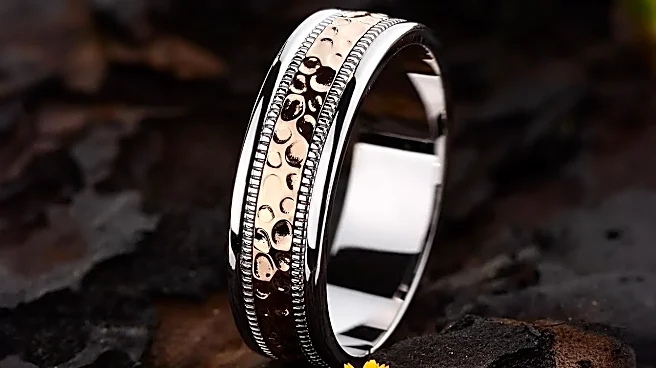









First, What Is Milgrain?
Milgrain, from the French word “mille-grain” meaning “a thousand grains,” is a jewelry design technique that creates a border of tiny metal beads along the edge of a ring. This delicate texture is what gives many rings an antique or vintage feel, reminiscent
of the detailed work popular in the Edwardian and Art Deco eras. More than just a pretty detail, milgrain softens the lines of a ring and adds a subtle sparkle by catching the light along its textured surface. It can frame a central stone, outline the band, or accentuate intricate engravings, making a piece feel finished and intentional.
The Hidden Detail: Hand-Applied vs. Cast
Here's the secret that separates good from great: how the milgrain is made. There are two primary methods. The first is cast milgrain, where the beaded detail is part of the original computer-aided design (CAD) model and is cast in metal along with the entire ring. This method is efficient and creates a perfectly uniform, consistent pattern. The second, more traditional method is hand-applied milgrain. Here, a jeweler uses a special handheld knurling tool to painstakingly press the beaded pattern into the metal after the ring has been formed. This was the only way to create milgrain for centuries, and it requires a steady hand and immense skill.
How to Spot True Craftsmanship
You don’t need to be a jeweler to see the difference—you just need to know what to look for. Cast milgrain, because it’s made from a mold, is typically very uniform and rounded. The beads are often perfectly symmetrical and identical. While clean and precise, it can sometimes lack character. Hand-applied milgrain, by contrast, has a subtle and organic quality. Because it's done by a human hand, you might notice slight, beautiful variations in the beads' spacing or shape. This isn't a flaw; it's the signature of a true artisan. Hand-applied beads often appear crisper and finer, with a delicacy that machines struggle to replicate. Look for a texture that feels almost alive with tiny imperfections—that’s where the artistry lies.
Why It Matters for Your Ring
Choosing between a hand-applied or cast milgrain band comes down to what you value. A cast ring offers precision and affordability, with a flawless, modern look. It’s a great option for those who want the vintage style with contemporary consistency. A hand-finished ring, however, offers a story. The slight variations in the milgrain are a direct connection to the craftsman who made it, a testament to time-honored techniques. This method often results in a more durable piece, as working the metal by hand can make it denser. For a symbol as personal as a wedding band, knowing that it was finished with individual care and skill adds a layer of meaning that can’t be replicated by a machine. It turns a beautiful object into a piece of art.