



The Cerebral Marksman: Forlán’s 2010 Masterpiece
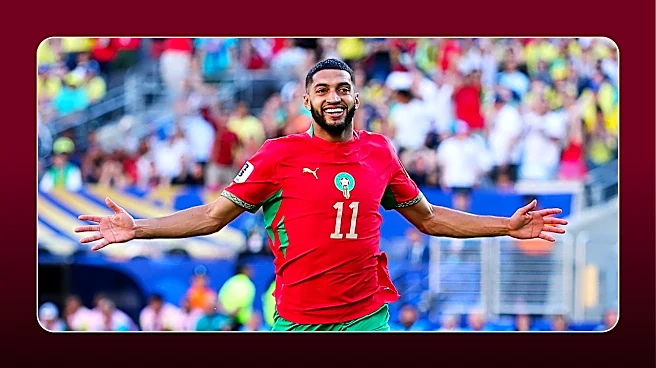
Enter Diego Forlán at the 2010 FIFA World Cup in South Africa. At 31, he wasn't the fastest player on the pitch, but he was arguably the smartest. For a surprising Uruguay team that reached the semifinals, Forlán was the tactical sun around which everything
orbited. He didn’t play as a traditional striker glued to the last defender. Instead, he drifted, a phantom finding pockets of space between the opposition’s midfield and defensive lines. By dropping deep, he pulled defenders out of position, creating chaos and opening channels for his teammates, like his strike partner Luis Suárez. His movement was a constant question the defense couldn't answer. This intelligence gave him the half-second he needed to unleash thunderous long-range shots, scoring five goals and becoming the first player since 1990 to score three from outside the penalty area in one tournament. His performance, a masterclass in positioning and timing, earned him the Golden Ball as the tournament's best player.
The Route Artisan: Kupp’s 2021 Playoff Dominance
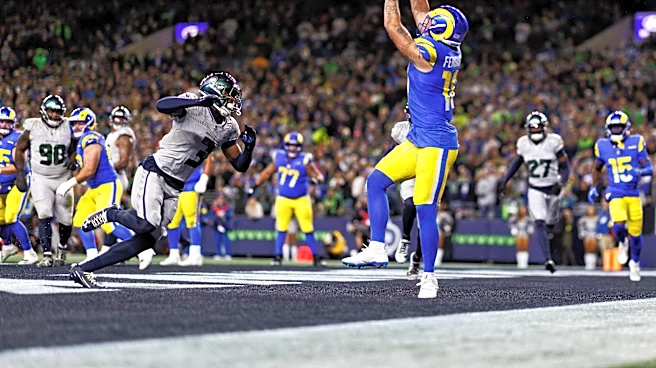
Now, fast-forward to the 2021-22 NFL playoffs. Cooper Kupp, a receiver for the Los Angeles Rams, was putting on a clinic of a different kind, but born of the same principle. Like Forlán, Kupp doesn't possess blistering, top-tier speed. Yet, defenders couldn't guard him. His dominance came from an encyclopedic knowledge of leverage, timing, and deception. During the Rams’ run to a Super Bowl title, Kupp was virtually uncoverable, setting a postseason record with 33 receptions for 478 yards and six touchdowns. His genius was in the details of his routes: a subtle head fake, a slight change in stride length, the precise angle of a cut. He treated every route like a puzzle, manipulating the defensive back's expectations. On the game-winning drive of Super Bowl LVI, with the world watching, Kupp was targeted again and again because he was the only reliable answer. His final touchdown catch, which earned him Super Bowl MVP honors, wasn't about outrunning his man; it was about out-thinking him.
The Universal Language of Movement
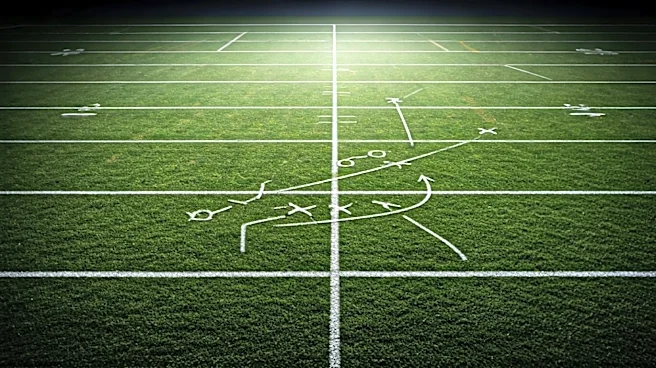
On the surface, soccer and American football are wildly different. One is fluid and continuous, played on a massive pitch with your feet. The other is a structured, stop-start collision of specialized roles. Yet, the intelligence of Forlán and Kupp speaks a universal language. Both men mastered the art of creating separation not through sheer athleticism, but through a profound understanding of space, timing, and psychology. Forlán did it in a 360-degree environment, reading the collective movement of 21 other players to find his spot. Kupp does it in a more one-on-one, structured setting, but the core skill is identical: selling a false intention to create a real advantage. They force defenders to react to a lie—a feigned run, a glance of the eyes, a dip of the shoulder—and then exploit the momentary hesitation that lie creates. It's a physical chess match played at full speed.
One Tournament, An Enduring Legacy
Neither Forlán's 2010 World Cup nor Kupp's 2021 playoff run was a fluke. They were the culmination of careers built on intelligence. Forlán's Golden Ball cemented his legacy as a national hero and one of the most complete forwards of his generation, a player who thought the game on a different level. Kupp’s performance, which capped a historic season where he won the receiving “triple crown,” established him as the undisputed best receiver in the game and a master of the craft. Both tournaments serve as a powerful lesson for athletes and fans. They are enduring case studies proving that in the highest-pressure moments, the sharpest mind is often a more potent weapon than the fastest feet. They remind us to watch beyond the ball and appreciate the subtle, brilliant movements that truly decide championships.