




An Anti-Schedule in a Temporary City
Black Rock City, the temporary metropolis of Burning Man, is massive, spanning over seven square miles. Yet, unlike almost any other large-scale gathering, there are no official headliners, main stages, or laminated schedules handed out at the gate. This
is by design. The event is built on a principle of "decommodification," which seeks to create an environment free from commercial sponsorships, transactions, and advertising. This ethos extends to the performances themselves. Big-name artists do play, but they are rarely promoted. A world-famous DJ might play a set from atop a mutant vehicle resembling a fire-breathing octopus, but you won't see it on an official app. Information spreads organically, through conversations at a camp's shared kitchen or a chance encounter in deep playa. This rejection of commercial hype ensures that the experience is about participation, not consumption.
The Journey Is the Point
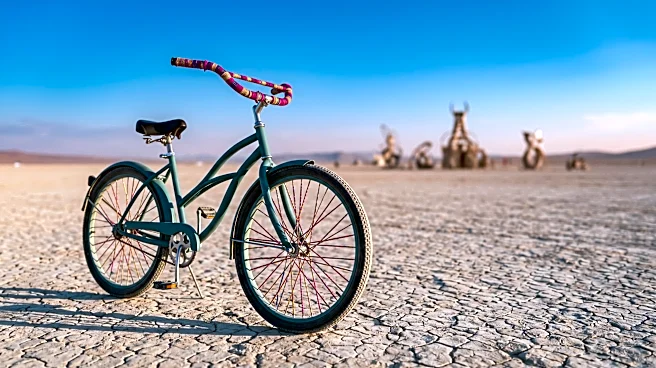
In a city where personal cars are banned from general use, the bicycle is king. It is the primary mode of transportation, a canvas for radical self-expression, and an essential tool for survival. The act of biking for 30 minutes or more to find a rumored party is not seen as a chore but as an integral part of the adventure. The sprawling, semi-circular layout of the city makes any trip a potential voyage of discovery. That long ride to a sound camp you heard about might lead you past a mind-bending art installation, a camp offering free grilled cheese sandwiches, or a spontaneous philosophical debate. The culture is guided by a principle of "immediacy," which encourages people to connect with the present moment and the reality of those around them. Getting lost is not a failure of navigation; it's an opportunity for serendipity.
The Power of the Unplanned
The most legendary moments in Burning Man history are often the ones that were never planned—or at least, never announced. For years, a recurring myth of a "secret Daft Punk set at the trash fence" sent thousands on a hopeful pilgrimage to the outer edge of the city. While the robots themselves may not have shown up, the collective belief and the shared journey created a unique, communal experience. In this environment, the allure of a performance is inversely proportional to how easy it is to find. A DJ set on a famous, well-funded art car is one thing; a solo cellist playing to the sunrise in the vast emptiness of the deep playa is another. The effort required to get there filters for the dedicated and the curious, creating an audience that is, by definition, fully invested. Everyone present chose to be there, not because a schedule told them to, but because their curiosity led them there.
Participation Over Spectatorship
At its core, Burning Man operates on a "radically participatory ethic." Attendees are not an audience; they are participants responsible for co-creating the city and its culture. This principle transforms the simple act of attending a performance. You aren't just a spectator consuming entertainment; you are an active part of the scene. The energy you bring, the wildly decorated bike you rode in on, and your interactions with others are all part of the fabric of the event. A performance is a gift from the artist to the community, and the community's engaged presence is a gift in return. This dynamic fosters a deep sense of collective ownership and shared reality. That dusty, uncertain, and often arduous bike ride isn't a barrier to entry; it's the first act of participation in an experience that you help create just by showing up.