

The Gatekeepers vs. The Insiders
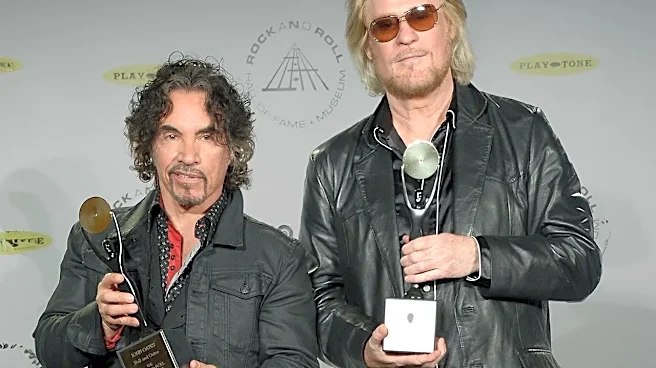
The fundamental difference between the Rock & Roll Hall of Fame and celebrations like the BET Hip Hop Awards or the erstwhile VH1 Hip Hop Honors lies in who holds the keys. The Rock Hall's process is famously opaque, controlled by a nominating committee
of journalists, historians, and industry figures—a small group of experts deciding who is worthy. This has led to decades of criticism about genre bias, personal grudges, and a perceived disconnect from what fans and artists see as influential. In contrast, hip-hop's major awards are often curated by a voting academy of entertainment professionals, media, and bloggers from within the culture. While VH1's Hip Hop Honors specifically celebrated foundational artists for their historical significance, the broader ethos remains: hip-hop validates itself. The culture serves as its own primary historian, celebrating pioneers and game-changers on its own terms, not waiting for an external institution to bestow legitimacy.
The Spirit of Rebellion, Redefined
A major point of friction is the very definition of “rock and roll.” Rock Hall leadership argues the term represents a “spirit” of rebellion and influence, not just a sound, justifying the inclusion of artists from Missy Elliott to Jay-Z. This inclusive definition is a source of constant debate, with rock purists and even some hip-hop artists questioning the fit. When N.W.A. was inducted in 2016, Ice Cube’s acceptance speech directly addressed this, stating, “Rock & roll is not an instrument… Rock & roll is a spirit… It’s not conforming to the people who came before you, but creating your own path.” He framed hip-hop not as a guest in rock’s house, but as the next step in that rebellious spirit. This is the core of the culture clash: the Rock Hall sees itself as absorbing hip-hop into its broad narrative, while hip-hop sees itself as the current, dominant iteration of that counter-cultural energy.
The Politics of Waiting
The timeline of recognition highlights the philosophical divide. Artists can wait decades for a Rock Hall nod. LL Cool J, hip-hop's first true superstar, was nominated multiple times before finally being inducted in 2021 via the “Musical Excellence Award,” a separate category from the main performers. To the Rock Hall, this was a long-overdue correction; to many in hip-hop, it was a prime example of the institution's sluggishness in recognizing one of the genre's most foundational figures. In contrast, hip-hop award shows are immediate and iterative. They don't just honor the past; they anoint the present. The BET Awards, for example, have categories for lifetime achievement alongside awards for the hottest new artist or viral track, creating a living, breathing canon that evolves in real time. There is no 25-year waiting period to be recognized as a cultural force.
Building Your Own Table
Ultimately, the existence of hip-hop-centric honors is a direct response to a history of being marginalized. For decades, rap was seen by the mainstream music establishment as a fad, not an art form with a legacy worth preserving. Institutions like the Hip Hop Honors on VH1 were created explicitly to give pioneers their flowers, valuing historical importance over commercial success. When a culture curates its own legacy, the criteria shift. Street credibility can matter as much as album sales. Lyrical innovation is weighed alongside chart performance. The ability to speak for a generation becomes a key metric for greatness. The Rock Hall is an institution trying to adapt to stay relevant, retroactively fitting hip-hop into its framework. Meanwhile, hip-hop built its own framework from the ground up, one that didn’t require outside validation to know its own worth.