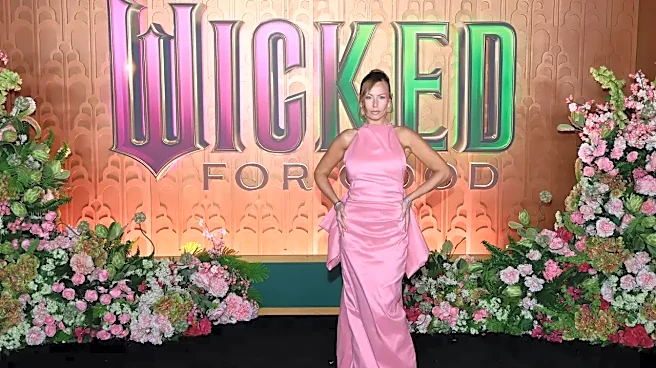

When you think of Glinda the Good, you probably picture effortless sparkle and a disarming smile. But in the cinematic world of 'Wicked,' it’s not her famous songs that tell the whole story. It's the quiet
moments that truly define her.
The Performance of Popularity
From her first entrance at Shiz University, Glinda is a whirlwind of sound and motion. She’s the girl who dictates social currency with a hair toss and a chipper pronouncement. Her signature song, 'Popular,' isn't just a catchy tune; it’s her entire philosophy laid bare. She believes public perception isn't just part of the game—it is the game. This obsession with being liked, with being 'good' for the sake of being seen as good, establishes the bubbly persona she perfects. It’s a performance of happiness and ease, a stark contrast to the quiet intensity of her roommate, Elphaba. This initial portrayal, familiar to anyone who knows the stage show, sets up the central conflict of her character: the yawning gap between her public face and her private self.
The Deafening Silence of Complicity
As the Wizard's regime begins to reveal its darkness, persecuting the Animals of Oz, Glinda’s strategic use of silence begins. Where Elphaba is loud in her defiance, Glinda’s inaction speaks volumes. Her unwillingness to publicly challenge the propaganda that paints Elphaba as 'wicked' is a choice. This silence isn't passive; it's an act of self-preservation that aligns her with the corrupt powers-that-be. She becomes, in effect, a tool of the state, her silence a tacit endorsement of the Wizard's lies. It’s in these moments, where a word of support for her friend could change everything, that her quiet becomes a source of tragedy. She prioritizes her cherished popularity over her personal integrity, and in doing so, helps build the very cage she will later find herself trapped in.
A Private Language of Grief
After Elphaba’s public fall from grace and Fiyero's departure, Glinda's silence transforms again. It becomes the language of her profound, lonely grief. As 'Glinda the Good,' she must perform for Oz, radiating a calm assurance she does not feel. But the films linger on the quiet moments where the mask slips—the tear-stained face behind the curtain, the haunted look in her eyes as the citizens celebrate Elphaba’s supposed death. She is surrounded by people but is utterly alone, mourning the loss of her best friend and the man she loved, a sorrow she can never admit to. She believes them both to be gone, partly due to her own actions, and this unspoken burden is what truly begins her transformation, cracking the facade of the 'girl in the bubble' and forcing her to confront the world she helped create.
The Final, Enduring Secret
By the end of 'Wicked: For Good,' Glinda finally wields power, but her most significant act remains a silent one. After ousting the Wizard and arresting Madame Morrible, she is left to rule, forever holding the secret of what truly happened to Elphaba. She allows the world to believe the lie, preserving Elphaba's freedom at the cost of her own truth. Her final, most enduring act of friendship is not a song or a speech, but a lifelong silence. She can never tell anyone that Elphaba wasn't wicked, that their friendship changed her, or that her friend is, in fact, alive. This is the ultimate weight of her journey: to live with the truth no one else can ever know, a silent testament to a bond that changed her 'for good.'