


The Gospel of Sentimental Horror
Mike Flanagan has become one of horror’s most vital voices by treating the genre as a Trojan horse for exploring messy, human drama. Across his Netflix anthology—from 'The Haunting of Hill House' to 'Midnight Mass'—the supernatural is often a metaphor
for real-world pain: addiction, family dysfunction, and loss. His stories are frequently called 'slow-burns' or 'sentimental horror' because the scares only land after you’ve become invested in the characters' emotional lives. He prioritizes dialogue and psychological depth over a constant barrage of jump scares, believing there's no real terror if you don't care about the people in peril. This approach has created a distinct brand. Flanagan's latest project, an eight-episode adaptation of Stephen King’s 'Carrie' which premiered on Prime Video on October 7, continues this tradition. While the story of a bullied teen with telekinetic powers is familiar, a series format gives Flanagan the space to delve deeper into the simmering grief and trauma that lead to the infamous prom night, a hallmark of his character-first approach.
A More Human Monster
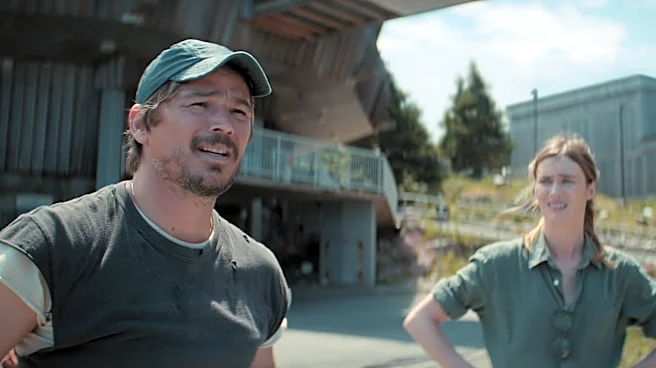
Flanagan's influence seems to be bleeding into the broader television landscape this Halloween season. Take Peacock’s 'Crystal Lake,' which debuted on October 15. Instead of focusing on the hockey-masked Jason Voorhees, the series is a prequel centered on his mother, Pamela, played by Linda Cardellini. It frames her not as a one-dimensional killer but as a mother consumed by grief after her son’s drowning, exploring the psychological path that leads to her violent rampage in the original 1980 film. It’s a move straight from the Flanagan playbook: find the humanity behind the monster. Similarly, Netflix’s 'Below,' starring Josh Hartnett, which was released on October 8, isn't just a simple creature feature. Set in a small Newfoundland fishing town, the series uses its sea monster to explore community anxiety, secrets, and the fight to preserve a disappearing way of life, intertwining the external threat with the internal struggles of its characters.
Why We Crave Deeper Scares
So why is this character-driven style resonating so strongly now? The streaming era is partly to thank. A limited series offers a much larger canvas than a 90-minute film, allowing creators the time to build worlds and develop complex character arcs. Audiences, in turn, have shown an appetite for stories that offer more than just a quick adrenaline rush. After years of jump-scare-heavy franchises, many viewers are hungry for horror that sticks with them, prompting reflection on its themes long after the credits roll. Flanagan himself has stated his process involves perfecting the characters and story before even adding the genre elements. This method ensures the horror is baked into the narrative's emotional core rather than feeling like a cheap, tacked-on thrill. By treating horror as a serious dramatic art form, he and other creators are proving that the most terrifying stories are the ones that reveal something uncomfortably true about ourselves.