





Spectacle Sells, but Soul Satisfies
Let’s be honest: the trailers and marketing for the live-action 'Moana' will lean heavily on the spectacle. We’ll see newcomer Catherine Laga'aia bravely navigating treacherous seas. We’ll see Dwayne Johnson, reprising his iconic role as Maui, transforming
into a hawk. There will be dazzling visual effects, epic battles with coconut-armored Kakamora, and a shimmering, monstrous Tamatoa. This is the formula for a summer blockbuster, and it’s what puts people in seats. Disney knows that the high-seas adventure is the commercial hook. But after a decade of live-action remakes that have often felt hollow despite their visual gloss, audiences are savvy. They know that spectacle without soul is forgettable. The original animated 'Moana' became a cultural touchstone not just because of its adventure, but because its hero’s journey was deeply rooted in a place and a people worth saving. The live-action version can't just replicate the plot points; it has to earn the emotion.
The Motunui Dilemma: It's Not Just a Starting Zone
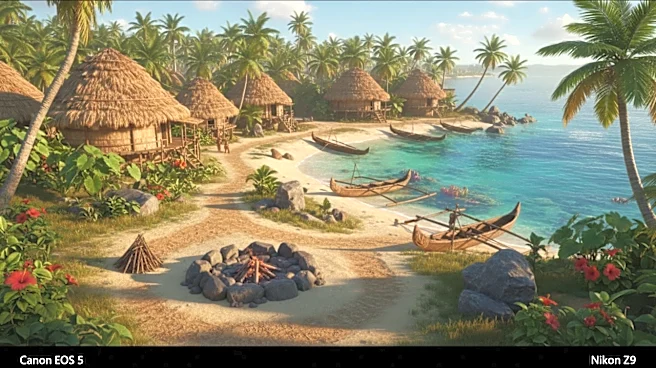
In the 2016 film, the island of Motunui isn't a tutorial level Moana is trying to escape; it's her entire world. The opening sequence, driven by the song "Where You Are," is a masterclass in world-building. We see a vibrant, functioning society where everyone has a role. We see Moana’s deep love for her family, her community, and her responsibilities as the future chief. This isn’t the typical Disney princess trope of wanting to escape a provincial life. Moana is torn. She feels an irresistible pull to the ocean, yes, but leaving Motunui is a genuine sacrifice, not an easy choice. This internal conflict is the engine of the entire story. The live-action adaptation, helmed by 'Hamilton' director Thomas Kail, faces the monumental task of making Motunui feel just as alive. It has to be more than a pretty beach; it has to feel like a home so precious that a teenager would risk her life on the open ocean to protect it.
The 'I Want' Song Is Actually an 'I Have' Song
Think of the classic Disney "I Want" song: Ariel wants to be 'Part of Your World,' Belle wants 'adventure in the great wide somewhere.' These characters are defined by what they lack. Moana is different. Her song, "How Far I'll Go," is a struggle against her own identity, not a rejection of it. The lyrics are a painful admission: "I wish I could be the perfect daughter, but I come back to the water." She loves her island and her role, which makes her calling to the sea a source of conflict, not just ambition. This nuance is everything. For the live-action version to work, Laga'ia's performance in these early scenes must convey this profound connection to her home. Her relationship with her no-nonsense father, Chief Tui (John Tui), and her free-spirited Gramma Tala (Rena Owen) must establish the stakes. The audience has to believe in her love for Motunui before they can believe in her quest to save it.
Why This Is the Ultimate Challenge
Many Disney live-action remakes falter when they fail to translate the expressive magic of animation into a new medium. The hyper-realism can strip away the charm and emotion. Capturing the spirit of Motunui isn't about CGI; it's about conveying a feeling of community, tradition, and generational love. In recent interviews, Dwayne Johnson has emphasized that the live-action version feels richer because it involves "real flesh and blood, real people looking each other in the eyes." He speaks of honoring the culture as being emblematic of the Polynesian people's grace and warrior strength. That promise is tested not in the big action sequences, but in the quiet, foundational moments on the island. If the film can make us feel the weight of Gramma Tala's wisdom, the burden of Chief Tui's fear, and Moana's genuine heartbreak at the thought of disappointing her people, then the rest of the journey—no matter how spectacular—will resonate with true emotional power.