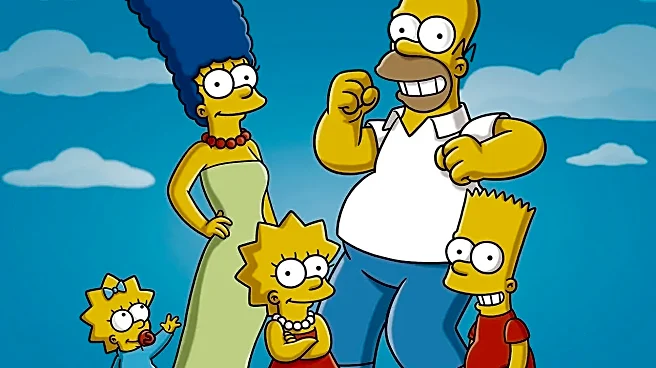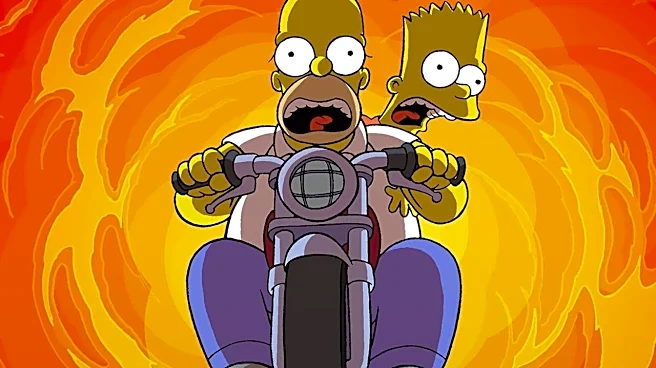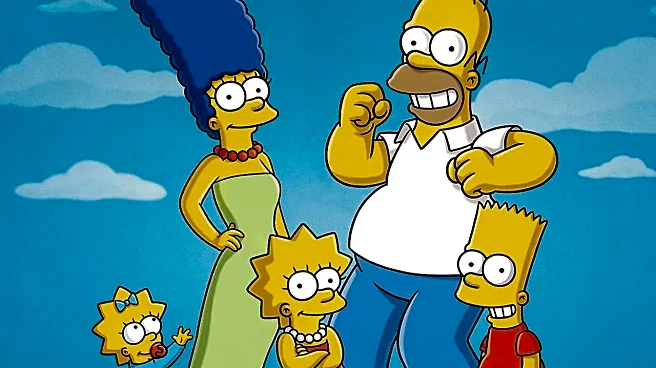



Before 1990, Halloween on television was a fairly predictable affair. But when 'The Simpsons' first aired its 'Treehouse of Horror' special, it didn't just participate in the tradition—it blew it up and rebuilt it from scratch.
A Spooky, But Safe, Tradition
Think back to television
specials of the 1970s and 80s. Halloween episodes were common, but they were also tame. They were one-off stories designed for family viewing, where any spookiness was guaranteed to be resolved with a laugh and a lesson by the end of the half-hour. The core reality of a show was never threatened. Characters didn't die, the world didn't end, and everything was back to normal the following week. It was a reliable, but creatively restrictive, formula. The Simpsons was about to change that forever.
Breaking the Unwritten Rules
The first 'Treehouse of Horror,' which aired on October 25, 1990, was presented as three scary stories told by Bart and Lisa in their treehouse. It was inspired by the gory and ironic EC Comics of the 1950s. But its most revolutionary act was a simple one: it was declared non-canon. This decision, reportedly a trade-off to give exhausted writers more freedom, was the key that unlocked everything. Suddenly, the characters could be killed off in gruesome ways, aliens could conquer Earth, and the family could be driven murderously insane. By stepping outside the normal continuity, the writers created a sandbox where the only rules were to be entertaining and, if possible, a little shocking.
A Playground of Parody and Style
With the guardrails removed, 'Treehouse of Horror' became a laboratory for parody and stylistic innovation. The specials became famous for their sharp, loving homages to classic horror and sci-fi. Segments like 'The Shinning' (a shot-for-shot parody of 'The Shining') and 'Hungry are the Damned' (a twist on a classic 'Twilight Zone' episode) introduced a generation of viewers to genre staples. But the experimentation wasn't just narrative. The series famously ventured into 3D computer animation with 'Homer³' in 1995, a mind-bending segment that was visually unlike anything else on television at the time. More recent specials have continued this trend, playing with stop-motion animation and even dedicating entire episodes to a single parody, like the 'It' spoof 'Not It'.
More Than Just Jokes
While packed with laughs, the specials were never afraid to be genuinely creepy. The 'Nightmare on Evergreen Terrace' segment, which turned Groundskeeper Willie into a Freddy Krueger-style dream demon, was filled with surreal and unsettling imagery. The format allowed the show to explore darker themes of death, paranoia, and the supernatural that were impossible in a standard episode. This blend of comedy and horror made the specials feel like event television. Marge even delivered a tongue-in_cheek warning to parents before the early installments, a nod to the fact that these episodes were intentionally pushing the boundaries of what a primetime cartoon could be.
The Blueprint for Halloween TV
The massive success and cultural penetration of 'Treehouse of Horror' created a new blueprint. Other shows, both animated and live action, saw the appeal of an annual, non canon Halloween episode where anything could happen. Shows like 'South Park,' 'Community,' and 'Bob s Burgers' have all produced their own inventive Halloween specials that owe a debt to the anything goes spirit pioneered by 'The Simpsons.' Even after more than three decades, the series continues to experiment, sometimes breaking its own three story format for a single, continuous narrative. The 'Treehouse of Horror' wasn t just another Halloween special; it was the birth of a new genre.