








The Pro's Eye for Undertones
The first major difference is how pros and beginners perceive color. A beginner sees foundation in terms of light, medium, or dark. A professional sees the color under the color: the undertone. Skin undertones—cool (pink/blue), warm (yellow/peach), or neutral
(a mix)—are the key to a true match. The skin on your face, neck, and chest often have different tones due to sun exposure and skincare routines. Your face might be redder, while your chest is more golden or pale. A pro identifies the dominant undertone that will unify all three areas, sometimes choosing a shade that isn't a perfect match for any single spot but acts as the perfect bridge between them all. A beginner might perfectly match the color of their chest, but if that chest has a cool undertone and their face is warmer, the foundation will look ashy or disconnected.
Your Face and Chest Tell Different Stories
Beyond undertones, the skin on your face and chest are fundamentally different. The face often gets more sun, leading to hyperpigmentation or a slightly darker complexion than the typically more protected chest. Conversely, dedicated skincare with exfoliants and SPF can make the face lighter than the rest of the body. Texture also plays a massive role. Facial skin has pores, potential acne, and fine lines, while the skin on the décolletage is generally smoother. A foundation formula that sits beautifully on the smooth canvas of the chest might emphasize every bit of texture on the face. Pros understand this and select formulas—matte, dewy, satin—that work with the skin's finish, not against it.
Application Isn't a Single Step
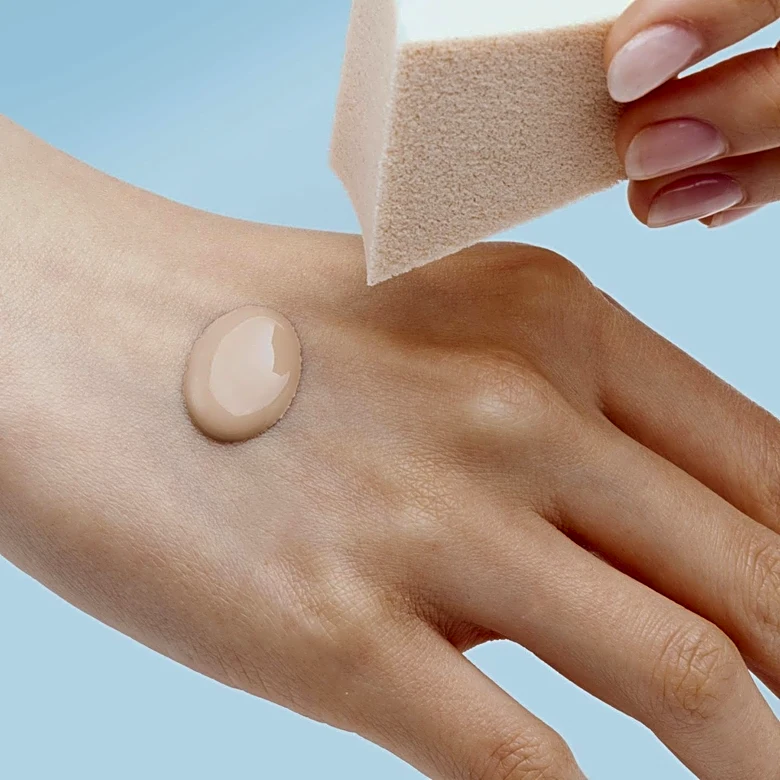
For a beginner, foundation is often a one-and-done deal: apply a single shade all over. For a pro, it's a multi-step process of building, blending, and transitioning. Professionals rarely use just one foundation color. They often custom-mix shades on a palette to create the perfect transitional color. They might use a slightly lighter shade in the center of the face for brightness and a color closer to the neck shade around the perimeter. The real magic happens with blending. A pro doesn’t stop at the jawline; they use brushes or a damp sponge to feather the foundation down the neck, creating an imperceptible gradient. This technique makes the face, neck, and chest appear as one continuous, even tone, even if they started as three different colors.
Lighting Never Lies
You could have the perfect shade and technique, but bad lighting will betray you every time. Department store lights are notoriously misleading, often skewing overly warm or cool. A foundation that looks perfect under fluorescent bulbs might appear orange or ashy in natural daylight. Professionals work under balanced, natural-mimicking light (ideally with a high Color Rendering Index, or CRI) that reveals a color's true nature. When beginners test foundation, they often do a quick swipe in the store and make a decision. A pro will swatch along the jawline, wait for it to dry and oxidize (as some formulas darken with air exposure), and then step outside to check it in natural light. This crucial step ensures the match holds up in the real world, not just in the store.
It's About Harmony, Not Matching
Ultimately, the biggest secret is a shift in mindset. Beginners are searching for a single product to match their skin. Professionals are creating an effect of harmony across different zones. They use the chest as a reference point, not a strict rule. The goal isn't to make your face the exact color of your chest. The goal is to create a believable, seamless transition so that no single part draws attention. They achieve this by neutralizing redness on the face with color correctors, warming up a paler neck with a light dusting of bronzer, and strategically blending so there are no hard stops or starts. The final look is a cohesive canvas, not a collection of perfectly matched but disconnected parts.