





The Trophy That Isn't the Top Priority
In America, a championship is a championship. In Italy, it’s more complicated. The Coppa Italia is the nation’s premier knockout tournament, culminating in a final in Rome’s grand Stadio Olimpico. A major trophy is lifted, champagne is sprayed, and a team
earns a spot in the next season’s UEFA Europa League. So why does it often feel like an afterthought? The simple answer is that for Italy’s biggest clubs— Juventus, Inter Milan, AC Milan—it’s just not the prize they’re chasing. In the hierarchy of Italian football, the Coppa Italia sits a distant third. It’s a respectable honor, but it’s not the one that defines legacies, dictates financial futures, or earns a manager god-like status. For the giants of the game, it's often viewed as a consolation prize or a nice bonus, not the main event.
In the Shadow of the Scudetto
To understand Italian soccer is to understand the supreme, all-consuming importance of the *Scudetto*. This is the title awarded to the winner of the Serie A league season. It’s a 38-game marathon, a test of consistency, depth, and tactical genius. Winning the league is what gets you the small Italian flag patch on your jersey for the following season. It is the ultimate domestic achievement, the marker of true dominance. A club that wins the Scudetto is unequivocally the best team in Italy. A club that *only* wins the Coppa Italia while a rival wins the league is seen as having had a disappointing season. Fan passion, media coverage, and club resources are all overwhelmingly directed toward the league campaign. As a result, managers of top teams often use early and mid-round Coppa Italia matches to rest their star players and give minutes to younger prospects or benchwarmers.
The Even Bigger Lure: Europe
If the Scudetto is priority number one, the UEFA Champions League is 1A. Competing against Europe’s elite like Real Madrid, Manchester City, and Bayern Munich brings unparalleled prestige, global exposure, and, most importantly, mountains of cash. A deep run in the Champions League can be worth over a hundred million dollars, fundamentally changing a club's financial health. The prize money for winning the Coppa Italia is a tiny fraction of that. For top Italian clubs, the primary goal of the domestic season is to finish in the top four of Serie A to guarantee a spot in the next year’s Champions League. This financial and sporting imperative dwarfs the appeal of the domestic cup. Why risk your star striker getting injured in a Coppa Italia match in January when you have a crucial Champions League knockout game—or a vital league match against a rival—the following week?
So When Does It Actually Matter?
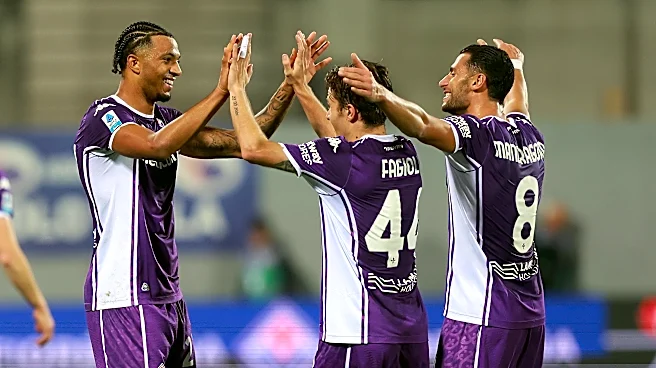
This is the heart of the paradox: while the Coppa Italia is a secondary objective, it can suddenly become immensely important. If a team has a disastrous league season and is out of the title race by spring, the cup becomes a lifeline—a way to salvage the year and deliver a piece of silverware to the fans. For mid-tier clubs like Atalanta, Fiorentina, or Lazio, it represents a rare and precious opportunity to win a major trophy and crash the party of the traditional giants. And when the final features two historic, bitter rivals—think Juventus vs. Inter or a Rome derby between Roma and Lazio—all that context about priorities goes out the window. For those 90 minutes, it becomes the most important game in the world, fueled by pure, unadulterated animosity and the desire for bragging rights. The trophy's meaning is fluid; it changes based on who is playing and what else is at stake.