




The Anatomy of a Power Hairstyle
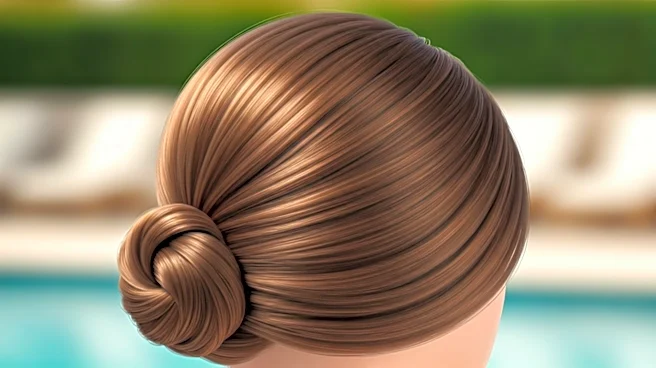
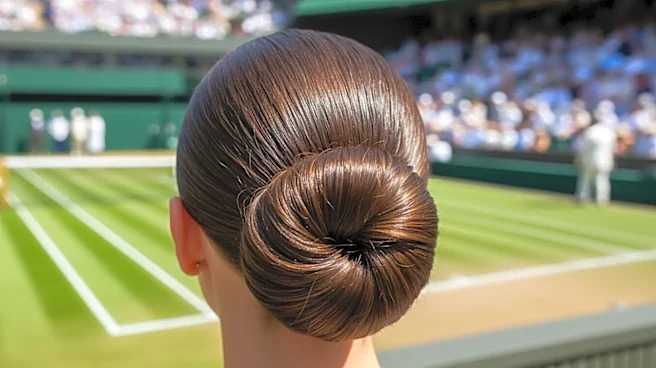
First, let’s define the look. This isn't just any bun. It’s the 'clean-girl' bun, a style that migrated from social media feeds to the world’s most prestigious tennis tournament. Its characteristics are specific: hair is slicked back tightly, often with
a severe center part, leaving no room for flyaways or frizz. The bun itself is usually a neat, compact knot at the nape of the neck or mid-head. The goal is an illusion of effortless polish, a look that appears fresh, minimalist, and almost impossibly neat. While the aesthetic suggests a low-maintenance vibe, it’s anything but. Achieving that level of smoothness requires a deliberate process—an 'engineering' of sorts, using gels, oils, and precision brushing to create a flawless silhouette.
A Perfect Match for Wimbledon's Code
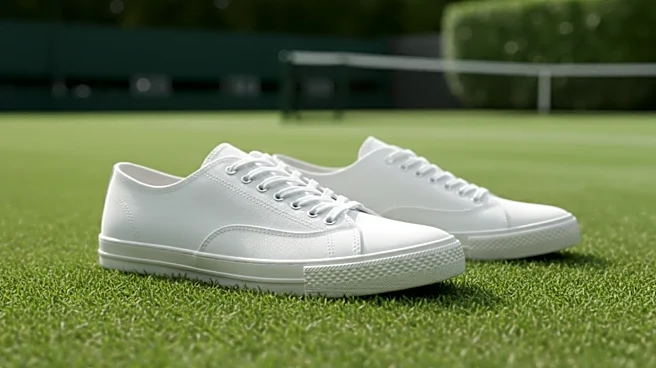
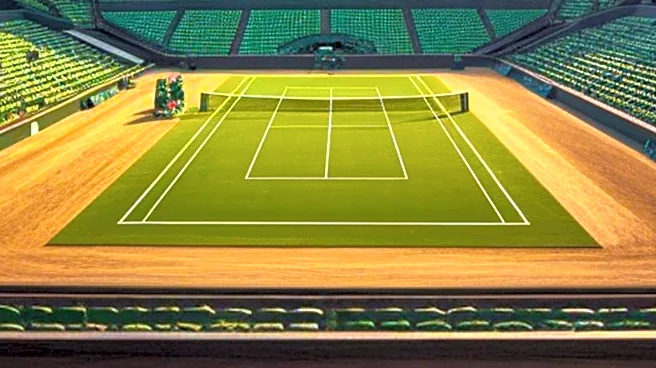
Wimbledon is a tournament defined by tradition and rules. Its most famous regulation is the all-white dress code, a policy rooted in 19th-century notions of propriety to minimize the appearance of sweat. The code is notoriously strict, specifying that 'white does not include off-white or cream' and limiting any color trim to a single centimeter. This atmosphere of extreme control and visual uniformity makes the clean-girl bun a perfect follicular counterpart. It’s the hairstyle equivalent of the all-white uniform: tidy, respectful of tradition, and devoid of unnecessary flourish. For athletes in the heat of competition, the practicality is undeniable. The style keeps hair completely secure, eliminating distractions during a high-stakes match. It’s a look that communicates seriousness and focus before a single ball is served.
Signaling Control, Freshness, and Ease
The headline’s key terms—control, freshness, and ease—perfectly capture the psychology of this hairstyle in a sporting context. 'Control' is paramount. On the court, where players battle for dominance, a hairstyle that is immaculately controlled projects an image of mental fortitude and unbreakability. Not a hair is out of place, suggesting the athlete’s entire game is just as composed. 'Freshness' is both literal and symbolic. In the summer heat, a sleek updo is a practical way to stay cool. But it also aligns with the 'clean girl' aesthetic's emphasis on a healthy, fresh-faced appearance, projecting vitality even under immense physical pressure. Finally, 'ease' is the most powerful illusion of all. The bun looks simple, but its perfection implies discipline. It’s a curated effortlessness, a visual shorthand that says, 'I am so prepared that even my hair is performing flawlessly without a second thought.'
Beyond the Baseline
The influence of the clean-girl bun isn’t limited to the players. In the stands and the Royal Box, spectators often adopt similar styles. For guests, it signals an understanding of the unspoken codes of Wimbledon—understated elegance and respect for the event's decorum. The Princess of Wales, for example, has been noted for her polished ponytails and updos at the tournament, styles that are sleek, controlled, and free from flyaways. When everyone from the athletes on the court to the royalty in the stands embraces a similar aesthetic, it transforms from a simple hairstyle into a key part of the event's 'Serious Summer Edit.' It becomes a unifying thread in the visual tapestry of Wimbledon, connecting the performers with the patrons in a shared language of polished restraint.