




The Digital Paintbrush Explained
So, what is projection mapping? Think of it as a video projector on steroids, but with a Ph.D. in architecture. Instead of projecting onto a flat, white screen, this technology uses specialized software to map video content onto any three-dimensional
surface. The software creates a virtual model of the stage—its curves, angles, and textures—and tailors the projection to fit it perfectly. The result is an illusion where the architecture itself seems to come alive, displaying motion, color, and depth. It’s the difference between hanging a painting on a wall and turning the entire wall into the painting.
From Plywood to Pixels
Before projection mapping went mainstream, awards-show stages were marvels of physical engineering. Think grand, opulent sets built from wood, metal, and fabric. These stages were impressive but inherently static. Changing from one look to another was a massive undertaking, often requiring a full commercial break for a crew to manually move heavy pieces. While designers created breathtaking environments, they were largely locked into a few key looks for the entire three-hour broadcast. The evolution from these traditional sets to digital ones mirrors the entertainment industry's own technological leaps over the decades.
A Canvas That Moves and Breathes
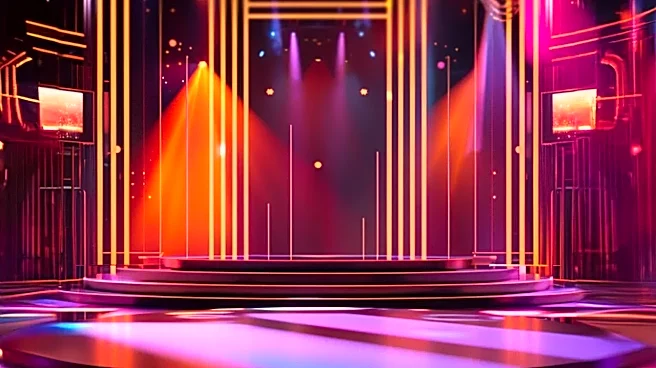
Projection mapping shattered those physical limitations, handing designers an infinitely flexible tool. A single, often minimalist, physical set can now become a dozen different environments over the course of a show. During a musical performance, the stage can pulse and react to the beat in real-time. For an "In Memoriam" segment, the backdrop can transform into a somber, celestial field. This dynamism allows the stage to become an active participant in the storytelling, enhancing the mood of each award category or performance in a way static sets never could. Shows like the Oscars and Grammys have increasingly relied on this technology to create immersive moments that are both grand in scale and emotionally resonant.
More Than Just Cool Visuals
The shift to projection mapping isn't just about creative freedom; it's also incredibly practical. Building, transporting, and storing multiple massive physical sets for a one-night event is expensive and logistically complex. Digital scenery dramatically reduces the need for physical materials, which in turn can lower costs and offer a more sustainable production footprint. It also provides unparalleled flexibility. If a presenter changes or a segment is cut at the last minute, the visual content can be modified with a few clicks, rather than requiring an entire set to be physically altered. This adaptability is crucial in the high-pressure, live-broadcast environment of major awards shows.