








Start With the House
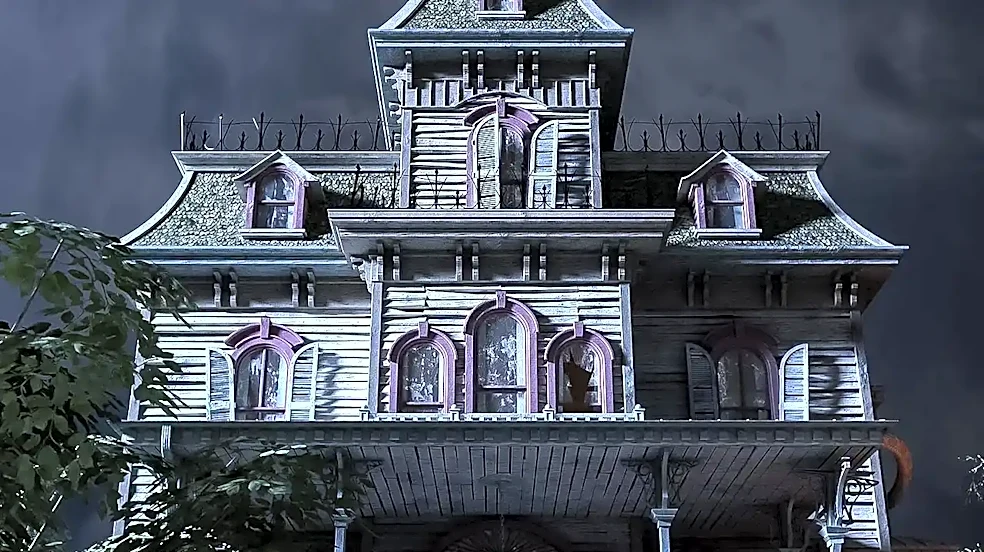
Every great haunted-family story needs a great setting, and it's often more than just a backdrop. Is the house itself evil, like the Overlook Hotel in 'The Shining' or the titular home in 'The Haunting of Hill House'? Or is it just a container for the family's
misery, reflecting their internal decay? When discussing 'Other Mommy', consider the home's role. Does it have a history? Does it warp and change? Comparing how the film's setting functions as a character, rather than just revealing what happens inside it, is a perfect spoiler-free starting point.
Unpack the Family Dynamics
Haunted-family movies are rarely about the ghosts; they're about the family. The horror comes from pre-existing dysfunction that makes them vulnerable. Think of the simmering resentment and breakdown of the Torrance family, which the Overlook merely exploits. Or look at 'Poltergeist,' where a loving, stable family's strength is tested by an outside force. You can discuss whether the family in 'Other Mommy' feels more like the Freelings ('Poltergeist')—a solid unit under attack—or the Grahams ('Hereditary'), whose secrets and resentments become the very engine of their destruction. This focuses the conversation on character drama, not plot points.
Trace the Generational Trauma
Many of the best films in this genre explore the idea of inherited curses or trauma passed down through generations. 'Hereditary' is the modern master of this, making family history a literal source of terror. Does the horror in 'Other Mommy' start with this family, or is it a cycle they've unknowingly stepped into? You can analyze the role of grandparents or long-dead relatives mentioned in passing. This 'grief horror' lens allows for a deep, thematic discussion about whether the characters are haunted by ghosts or simply by their own lineage, a concept far more terrifying than any jump scare.
Examine the Role of the Child
Children in these stories are often special—they are conduits for the supernatural, the primary targets, or the first to realize something is wrong. Think of Carol Anne in 'Poltergeist' or Danny in 'The Shining'. Even in the stop-motion classic 'Coraline'—whose antagonist, the 'Other Mother', bears a thematic resemblance to the entity in 'Other Mommy'—a curious child unlocks a sinister world. When comparing 'Other Mommy', ask what role the child, Bela, plays. Is she a passive victim, a powerful psychic, or a key to the mystery? Discussing her agency (or lack thereof) keeps the focus on character archetypes instead of third-act reveals.
Compare the Nature of the Threat
Finally, talk about what the haunting is. Is it a ghost with unfinished business? A demonic entity with a larger goal, like in 'Hereditary'? Or is it a psychological breakdown, where the supernatural might be all in the characters' heads? 'The Shining' famously leaves this ambiguous. 'Other Mommy' presents a sinister doppelgänger, but what does it want? You can compare its motives and methods to other horror antagonists without giving away its endgame. Is the entity a manipulator, like 'Coraline's' Beldam, or a force of chaos? Framing the threat by its methods and motivations is the ultimate way to have a rich, spoiler-free debate.