





Not Your Average Music Festival
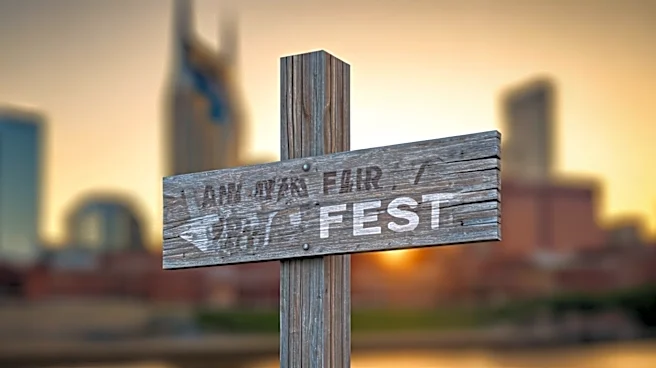
Forget Coachella’s influencers or Bonnaroo’s jam-band ethos. CMA Fest is built on a different foundation: pure, unadulterated fan access. Born in 1972 as “Fan Fair,” its core mission has always been to break down the barrier between stars and the people
who buy their records. While other festivals are transactional—you buy a ticket, you see a show—CMA Fest is relational. It’s a sprawling, city-wide ecosystem of free concerts on makeshift stages, grueling autograph sessions in the convention center, and intimate fan club parties where artists put in the off-stage hours. This unique structure creates a powerful feedback loop. Artists aren't just performing *at* fans; they are interacting *with* them, gauging reactions in real time on a massive scale.
The Gauntlet of Stages
The festival is a physical manifestation of country music’s pecking order. A new artist might start with a 20-minute set on a tiny stage sponsored by a chewing tobacco brand, playing for passersby dripping in the humid Tennessee heat. Success means graduating to the Riverfront Stage, a coveted daytime slot with thousands of dedicated fans. The next level is a primetime spot inside the stadium or a headlining gig at a partner venue. This journey, sometimes playing out over several years, is visible to the entire industry. Can you draw a crowd at 11 a.m. on a Thursday? Can you hold the attention of 70,000 people at Nissan Stadium, sandwiched between two superstars? Every performance is a public data point. It’s one thing to have a hit on the radio; it’s another to prove you have the charisma and stagecraft to command a massive, distracted audience.
The Crossover Litmus Test
Here's where the “mainstream ceiling” part comes in. The CMA Fest audience is vast and varied. It includes die-hard country purists from rural Tennessee, but also curious tourists from New York, bachelorette parties from Chicago, and international visitors who know the headliners from pop radio. This makes the crowd the perfect focus group for an artist with crossover ambitions. When an artist like Jelly Roll, with his blend of country, rock, and hip-hop, gets a thunderous response at Nissan Stadium, it’s a clear signal to labels, bookers, and brand partners that his appeal transcends the genre’s traditional boundaries. The same goes for Lainey Wilson, whose rock-and-roll swagger feels just as at home on a stadium stage as it does in a honky-tonk. Artists use their sets to test-drive new songs with poppier production or rock-infused arrangements. If the CMA Fest crowd embraces it, there’s a good chance the rest of America will, too.
From Fan Fair to Global Superstardom
The list of artists who used the festival as a launchpad is long. A teenage Taylor Swift famously spent hours signing autographs at Fan Fair, building the loyal base that would follow her to global domination. In the 2010s, Kelsea Ballerini and Luke Combs methodically worked their way up the festival’s ladder. More recently, artists like Morgan Wallen demonstrated their stadium-sized drawing power here long before their arena tours became record-breaking juggernauts. The festival serves as a proof of concept. An artist who can navigate the demanding schedule, charm fans up close, and deliver a show-stopping performance on the main stage has passed the industry’s ultimate test. They’ve proven they’re not just a radio act; they are a durable, marketable, and potentially mainstream-conquering star.