






The Fortress of Minimalism
Minimalism in fashion is a philosophy of restraint. It's about stripping things back to their essential form, prioritizing quality over quantity, and finding elegance in simplicity. Think of a perfectly tailored black suit, a crisp white shirt, or a collection
of neutral-toned cashmere sweaters. The goal is to create a timeless, versatile wardrobe where every piece works in harmony. This aesthetic projects quiet confidence and control. It’s a curated life, where the chaos of trends is purposefully ignored in favor of lasting style. The appeal is obvious: it’s clean, sophisticated, and incredibly safe. When minimalism fails, the worst you can be is a little boring. The clothes may not sing, but they rarely scream in horror.
The Theater of Camp
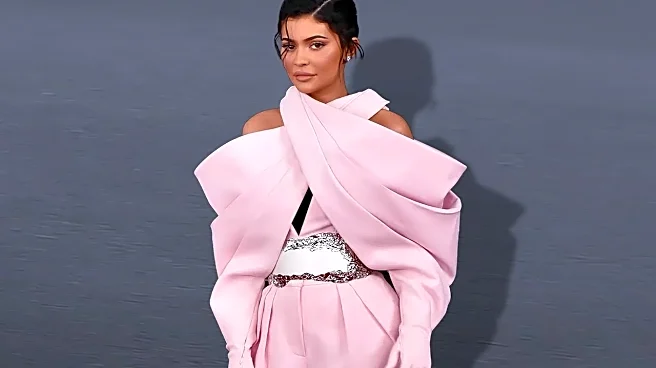
Camp, on the other hand, is a full-blown performance. As Susan Sontag defined it in her seminal 1964 essay "Notes on 'Camp,'" it's a sensibility that revels in artifice, exaggeration, and things being gloriously "too much." Camp sees the world as an aesthetic phenomenon, but one judged not by beauty but by its level of stylization and extravagance. It's a woman in a dress made of three million feathers; it's a look that is so over-the-top it becomes brilliant. Camp isn't just about loud clothes; it's about loving the unnatural and finding joy in irony. It requires a certain cultural literacy to understand that you're looking at a "lamp," in quotation marks, not just a lamp. It’s style as a wink and a nod.
The High-Wire Act of Getting It Right
This is where the difficulty lies. Minimalism is about editing down, a skill that can be learned and refined. Camp is about layering meaning, a far more precarious task. To succeed, camp requires a masterful understanding of context, irony, and performance. The wearer must be in on the joke, and crucially, they must get the audience in on it, too. When it works, like Lady Gaga’s multi-layered entrance at the 2019 Met Gala, it’s transcendent. But when it fails, it’s a catastrophe. Bad camp isn't just a boring outfit; it's a cringeworthy misunderstanding. It can look tacky, desperate, or just plain clueless. There's a fine line between a failed attempt at being serious (which Sontag called pure camp) and a deliberate attempt at camp that just doesn't land. The latter is often the most painful to watch.
Intention, Irony, and a Sense of Humor
Ultimately, the difference comes down to intent and risk. Minimalist style is about achieving a state of effortless perfection. The labor is in the careful selection and curation, but the final look is designed to appear simple. Camp, however, puts the effort on full display. It celebrates the performance, the ambition, and even the potential for failure. Pulling off minimalism proves you have good taste. Pulling off camp proves you have a point of view, a deep cultural understanding, and a killer sense of humor. You’re not just wearing clothes; you are communicating a complex idea. While a minimalist wardrobe can be built by following a clear set of rules—buy less, choose well, stick to neutrals—there is no such instruction manual for camp. You either get it, or you really, really don't.