








More Than Just a Pretty Picture
For decades, fantastical worlds on television were the product of painstaking, and often clunky, post-production work. Actors stood in front of vast green screens, imagining the alien landscapes or medieval castles that would be digitally painted in months
later. The results were often impressive, but a nagging disconnect remained. The lighting never felt quite right, the actor’s eyeline was slightly off, and the environment itself felt like a passive backdrop rather than a living, breathing part of the scene. But a technological revolution has been quietly reshaping how television is made. The shift is from creating a world after the fact to building it before the cameras even roll. This evolution in virtual production is turning digital environments from expensive afterthoughts into the central pillar of a show's visual identity, and the Television Academy is taking notice.
Exhibit A: The Worlds of 'Foundation'
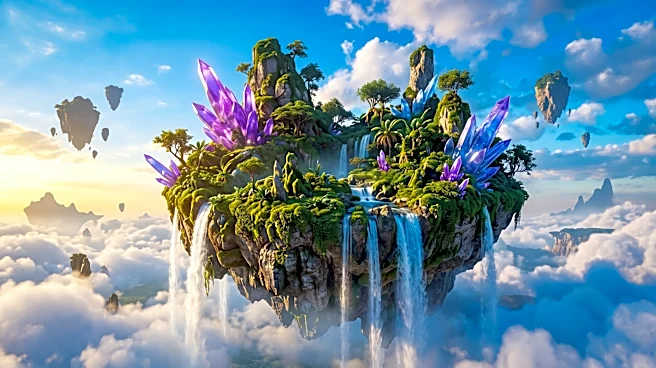
Look no further than this weekend's Creative Arts Emmy results for proof. While many categories saw tight races, the buzz around the technical achievement of shows known for their immersive worlds was undeniable. Apple TV+'s ambitious sci-fi epic, Foundation, was a key nominee for its stunning visual effects. The series brings Isaac Asimov's famously 'unfilmable' novels to life by creating a galaxy of distinct, believable planets. From the gleaming, sterile metropolis of Trantor to the desolate wastes of Terminus, these are not just sets; they are characters. The environments dictate the mood, drive the plot, and fundamentally shape how the audience experiences the story. When a show’s world-building is this complete, it elevates every other element. The production design, cinematography, and even the performances are in direct conversation with the digital world surrounding them, creating a seamless and profoundly convincing reality. This is why a single, powerful digital environment can become the 'hero piece' of an Emmy campaign.
How 'The Volume' Changed the Game
The magic behind this transformation is a technology often called 'The Volume,' a groundbreaking virtual production stage pioneered by Industrial Light & Magic for The Mandalorian. Imagine a massive, curved soundstage wrapped in ultra-high-resolution LED screens. Instead of a green screen, these panels display the photorealistic, computer-generated world in real-time. Actors can see and react to the alien sunset or the crumbling cityscape around them. More importantly, the digital environment projects real light and reflections onto the actors and physical props. This 'in-camera' approach solves the biggest challenge of green screen: integration. The lighting is naturally perfect because it’s really there. A character’s shiny armor reflects the digital sky, not a green void. This not only saves millions in post-production costs but also creates a more tangible and believable final image.
When the World Becomes the Story
This technology does more than just look good; it fundamentally changes the storytelling process. Directors and cinematographers can frame shots against a 'real' landscape, experimenting with angles and camera moves on the fly. Actors, no longer forced to imagine their surroundings, can deliver more grounded and authentic performances. The environment ceases to be a limitation and becomes an active storytelling tool. A looming, oppressive sky in a dystopian drama isn’t just an effect; it's a constant source of psychological pressure on the characters. A sprawling, intricate space station isn't just a location; it’s a narrative device that communicates the power and scale of an interstellar empire. As virtual production becomes more refined and accessible, the line between art direction, visual effects, and cinematography will continue to blur, creating a new, hybrid art form where the world itself is the star.