
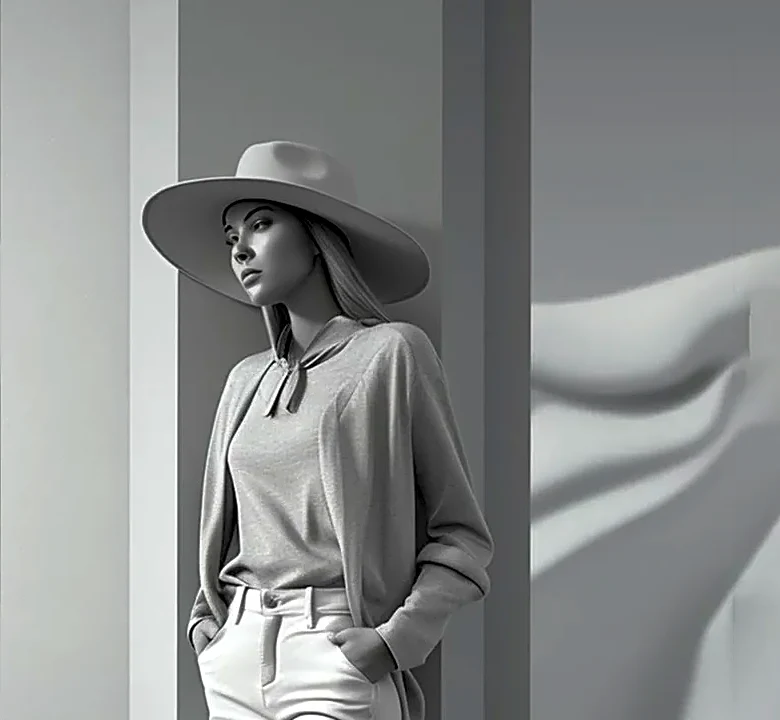


It’s the ultimate symbol of effortless chic: a coat you can throw over anything and instantly look polished. But the wrap coat’s journey from a private, robe-like garment to a city-ready staple is a story of social and sartorial revolution.
From the Drawing Room to the Sidewalk
The story of
the wrap coat begins indoors. For centuries, its ancestor was the dressing gown, a loose, unfastened garment worn in the privacy of one's home. Known in earlier centuries as a 'banyan' and inspired by Eastern garments like the kimono, it was a symbol of leisure and status, worn by aristocrats and intellectuals. For women in the 19th century, it was a welcome respite from restrictive corsets and layers of petticoats. The line between indoor and outdoor clothing was rigid. A robe was for relaxation and intimacy, not for public life. The idea of wearing something so fundamentally unstructured out in the world was radical, and it took a seismic shift in women's lives for the robe to finally step outside.
The American Look and Practicality
The first major step came during World War II, thanks to pioneering American designer Claire McCardell. As European couture houses shut down, American fashion had to find its own voice. McCardell championed what became known as 'The American Look': simple, functional, and elegant clothes for increasingly independent women. In 1942, she introduced the 'Popover Dress', a versatile wrap-around garment that could function as a housedress, a party dress, or even a swimsuit cover-up. It was designed for a woman who was active and did things. McCardell's innovation was to see that ease and elegance weren't mutually exclusive. By creating stylish, unrestrictive wrap designs, she laid the groundwork for a coat that could offer the same freedom of movement.
The Liberated Seventies
While McCardell planted the seed, the 1970s made the wrap silhouette iconic. This was largely thanks to Diane von Furstenberg and her legendary wrap dress, which debuted in 1974. Inspired by ballerina tops, the jersey wrap dress was presented as a symbol of a new kind of feminine power and liberation. It was sexy yet professional, easy to wear, and flattered a wide range of body types. By 1976, over a million had been sold. Though a dress, its immense popularity cemented the wrap-and-tie closure in the public consciousness. It proved that a garment with the simple mechanics of a robe could be the epitome of modern, confident style, paving the way for the wrap coat to become a mainstream outerwear choice.
The Ultimate Power Coat
The wrap coat’s final transformation into a luxury icon happened in 1981. That year, Italian fashion house Max Mara, working with French designer Anne-Marie Beretta, introduced the '101801' coat. Crafted from a blend of wool and cashmere, this doublebreasted camel wrap coat with its oversized fit, kimono sleeves, and tie belt was a masterpiece of proportion and quiet confidence. It arrived just as women were entering the corporate world in unprecedented numbers. The 101801 became their armor: a garment that projected authority and sophistication without sacrificing comfort. It was the antithesis of the severe, shoulderpadded power suit, offering a softer, more luxurious form of power dressing that has remained a global bestseller for decades.
An Enduring Modern Staple
Today, the wrap coat is a permanent fixture in the modern wardrobe. Its evolution mirrors the evolution of women's roles over the last century. It moved from the home to the street, from a symbol of privacy to one of public presence. Its enduring appeal lies in its unique blend of comfort and polish. It retains the ease of its dressing gown origins but carries the authority of a perfectly tailored piece of outerwear. In a world where life is a constant juggle, the wrap coat remains the go_to solution for looking put_together in an instant—a timeless garment that proves you don’t have to choose between being comfortable and being in charge.