






The Anatomy of a Final Run
The “Last Dance” narrative, immortalized by Michael Jordan’s final season with the Chicago Bulls, isn't just a basketball story; it’s a universal template for sporting drama. In soccer, it finds its most potent expression during the World Cup or a major
continental championship. The ingredients are always the same: a legendary captain, often in their mid-30s, carrying the weight of a nation’s hopes on their shoulders. They’ve won everything else—league titles, individual awards, fortunes beyond measure—but the one international trophy has remained elusive. This isn’t just another tournament for them; it’s a final, desperate grasp at a legacy-defining moment. Every match is loaded with meaning. Every step, every pass, every goal is framed by the ticking clock of their career. The narrative is fueled by years of near-misses and public heartbreak, creating a potent cocktail of pressure and possibility. Will they finally conquer their demons and lift the one trophy that has haunted them, or will they fall short one last time? It's this question that transforms a simple tournament into a global epic.
The Fairy-Tale Ending: Messi’s Coronation
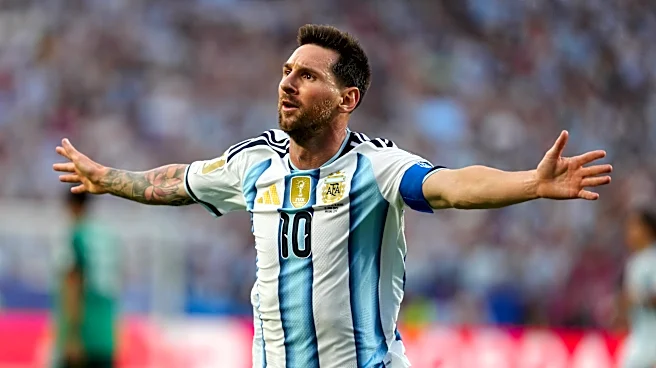
For the perfect execution of this storyline, look no further than Lionel Messi at the 2022 FIFA World Cup. At 35, Messi arrived in Qatar as arguably the greatest player of all time, but with a glaring hole in his resume. He had lost a World Cup final in 2014 and multiple Copa América finals, often in soul-crushing fashion. The narrative was set: could the little genius finally deliver for Argentina? The tournament played out like a Hollywood script. After a shocking opening loss to Saudi Arabia, the pressure intensified. But instead of crumbling, Messi embraced the role of leader and savior. He scored clutch goals, delivered magical assists, and willed his team forward with a grit previously unseen. The final against France was an instant classic—a chaotic, emotional rollercoaster that saw Messi score twice before finally triumphing in a penalty shootout. In that moment, as he lifted the golden trophy, he didn't just win a tournament; he completed his own story, providing the most cathartic and perfect “Last Dance” soccer has ever seen.
The Tragic Hero: Zidane's Final Fall
But the power of this narrative isn't just in its happy endings. Sometimes, its dramatic force comes from the tragedy of falling at the final hurdle. Enter Zinedine Zidane at the 2006 World Cup. The French maestro had retired from international football but was lured back for one last campaign. Against all odds, he dragged a supposedly aging French team to the final, playing with a sublime grace that defied his 34 years. He was the tournament’s best player, on the verge of a second World Cup title to cap a legendary career. He even scored an audacious chipped penalty early in the final against Italy. But then, in extra time, came the moment of madness: the infamous headbutt on Marco Materazzi. A red card, an ignominious walk past the trophy, and a loss on penalties for France. Zidane’s last dance ended not with a triumphant lift, but with a shocking act of self-sabotage. It was a tragic, flawed, and utterly unforgettable conclusion, proving that a failed final run can be just as mythic as a successful one.
The Quiet Goodbye and the Lingering Hope
Not every captain’s story ends in a blaze of glory or a dramatic implosion. Many “Last Dances” are quieter, more nuanced affairs. Think of Canada’s Christine Sinclair at the 2023 Women's World Cup, the all-time leading international goal scorer, ending her final tournament with a group-stage exit. There was no trophy, only the quiet, dignified end of an era. Similarly, Croatia's Luka Modrić has been on a perpetual farewell tour for years, continuing to defy age and lead his small nation to incredible heights, knowing each tournament could be his last. These stories matter because they reflect a different kind of ending—one defined by persistence and pride rather than a single, crowning moment. They remind us that the narrative isn’t always about winning it all. Sometimes, it’s about the simple, profound act of showing up one last time, wearing the armband with honor, and leaving the stage with nothing left to give.