







A Sitcom in Cartoon Clothing
The most radical thing about The Flintstones was its time slot: primetime. In 1960, animation was strictly for Saturday mornings. Hanna-Barbera, the studio founded by animation legends William Hanna and Joseph Barbera, gambled that a cartoon could attract
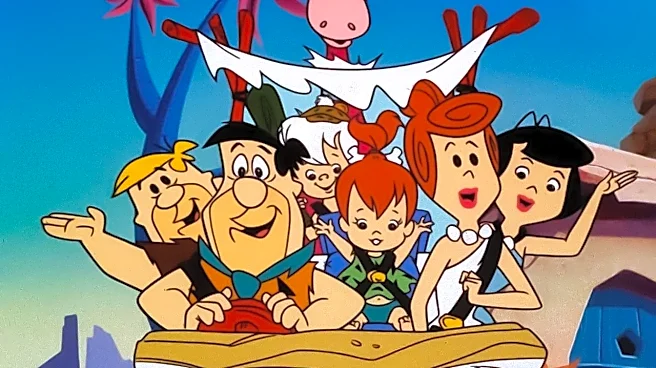
an adult audience if it behaved like the live-action sitcoms of the era. The show was heavily inspired by the wildly popular sitcom The Honeymooners, focusing on two couples, the Flintstones and their neighbors the Rubbles, navigating everyday life. Fred, the loud-mouthed but lovable patriarch, and his patient wife Wilma mirrored the working-class dynamics of shows that adults were already watching, just with a prehistoric twist. This strategic move proved that animation could be a medium for storytelling that resonated with the entire family, not just its youngest members.
Stone Age Problems, Modern Themes
While the setting was Bedrock, the problems were distinctly suburban American. The show tackled surprisingly mature themes for a cartoon, including workplace grievances, financial stress, social status, and marital squabbles. Fred's constant scheming to get a day off work or attend a Water Buffalo Lodge meeting was the stuff of classic sitcoms. But the series also ventured into deeper territory. One storyline famously depicted Fred and Wilma becoming the first married couple on American television to be shown sharing a bed. Another arc dealt with Barney and Betty Rubble's struggles with infertility before they adopted their super-strong son, Bamm-Bamm. These were not the narratives of children's programming; they were reflections of adult life, making the characters relatable and their world feel grounded despite the talking dinosaurs.
An Economical—and Influential—Blueprint
Behind the scenes, Hanna-Barbera pioneered a cost-effective production style known as "limited animation." To meet the demands of a weekly television schedule and budget, animators simplified character designs and reused backgrounds and animation cycles. This meant fewer unique drawings were needed for each episode, a stark contrast to the lavish, fully animated shorts made for theaters. While sometimes criticized for its less fluid style, this method made television animation viable on a mass scale. It created a sustainable model for producing half-hour animated shows that dominated the airwaves for decades. The Flintstones also became a merchandising giant, proving that an animated series could become a massive commercial franchise, a lesson not lost on future creators.
The Bedrock for Homer Simpson
The throughline from Fred Flintstone to Homer Simpson is direct and undeniable. Fred was the prototype for the modern animated sitcom dad: a flawed, often bumbling, blue-collar family man with a good heart buried under a layer of bluster. For 30 years, The Flintstones held the record for the longest-running primetime animated sitcom until The Simpsons came along and broke it. The creators of The Simpsons have openly paid homage to their prehistoric predecessor numerous times, from parodying the opening theme to referencing specific gags. Both shows satirize contemporary culture, family life, and celebrity, proving the formula Hanna-Barbera established in the Stone Age had enduring power. Without Fred's primetime adventures, the landscape of adult animation would look entirely different.