








A Childhood Friendship Forged in Court
The story of the Greens and Blacks is, at its heart, the story of two women: Princess Rhaenyra Targaryen and Lady Alicent Hightower. Before the animosity, there was a deep, formative friendship. Rhaenyra was the king’s daughter, a dragonrider with the weight
of the realm on her shoulders. Alicent was the daughter of the Hand of the King, Otto Hightower, and her friend’s closest confidante. They were inseparable, sharing secrets and navigating the stifling protocols of the Red Keep together. This initial bond is crucial, because the entire conflict is built on the ruins of their relationship. Their eventual schism wasn't between strangers, but between two people who once loved each other, making the betrayal all the more profound.
A Succession Crisis and a Broken Promise
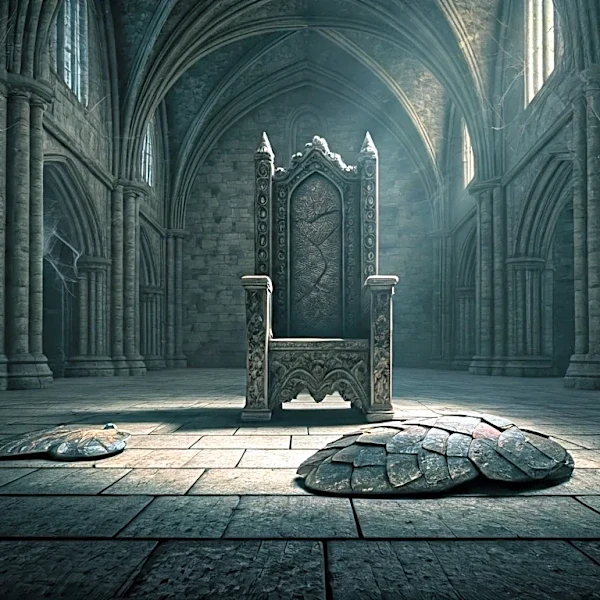
The first major crack appeared after the horrific death of Queen Aemma Arryn in childbirth. Devastated and without a male heir, King Viserys I did something unprecedented: he named his daughter, Rhaenyra, his official heir to the Iron Throne. He made the lords of Westeros swear fealty to her, breaking with centuries of male-preference primogeniture. In this moment, Alicent supported her friend. But the political ground was already unstable. Unbeknownst to Rhaenyra, Alicent's ambitious father, Otto, was quietly pushing his daughter to “comfort” the grieving king. This act, framed as duty, set Alicent on a path that would put her in direct conflict with the princess she swore to support.
The New Queen and the First Betrayal
When King Viserys announced his intention to remarry, the court expected him to choose Laena Velaryon for a powerful political alliance. Instead, he chose Alicent Hightower. For Rhaenyra, this was a devastating betrayal on two fronts. Her best friend was now her stepmother, and any sons Alicent bore the king would, by tradition, have a stronger claim to the throne than her. The personal and the political became inextricably linked. The friendship curdled into formal, strained courtesy. Alicent was no longer just a friend; she was a queen, and soon, the mother of a male heir, Prince Aegon. Her priorities shifted from her friendship with Rhaenyra to securing the future of her own children, a position her father relentlessly reinforced.
When the Greens Declared Their Colors
The factions received their names at the great tournament celebrating Rhaenyra’s marriage to Laenor Velaryon. For years, Alicent had worn the Targaryen red and black. But on this night, she made a dramatic entrance, interrupting the king's speech, wearing a striking green gown. This was no mere fashion statement. In the Hightower's home city of Oldtown, the signal to call their banners to war is to light the high tower's beacon green. By wearing that color, Alicent was publicly declaring her house and her allegiance. She was no longer just part of the Targaryen royal family; she was a Hightower, the head of her own faction at court. The battle lines were drawn. From that moment on, those who supported Queen Alicent and her sons were known as “the Greens,” while those loyal to Princess Rhaenyra’s claim remained “the Blacks.”
A Decade of Cold War and Bad Blood
The following years were a cold war fought in whispers and bitter accusations. Rhaenyra had three sons—Jacaerys, Lucerys, and Joffrey—who looked nothing like her Velaryon husband. Rumors, fanned by the Greens, spread that their father was actually Ser Harwin Strong. To call them bastards was to delegitimize Rhaenyra's entire line and invalidate her claim to the throne. The tension escalated until a brutal fight between the children resulted in Rhaenyra's son Lucerys slashing out the eye of Alicent’s son Aemond. In the aftermath, a furious Alicent demanded an eye for an eye, even drawing a dagger on Rhaenyra herself. The mask of civility was gone, replaced by open hatred. The children had inherited their parents’ feud, and blood had been spilled.